Innoshima Suigun Castle
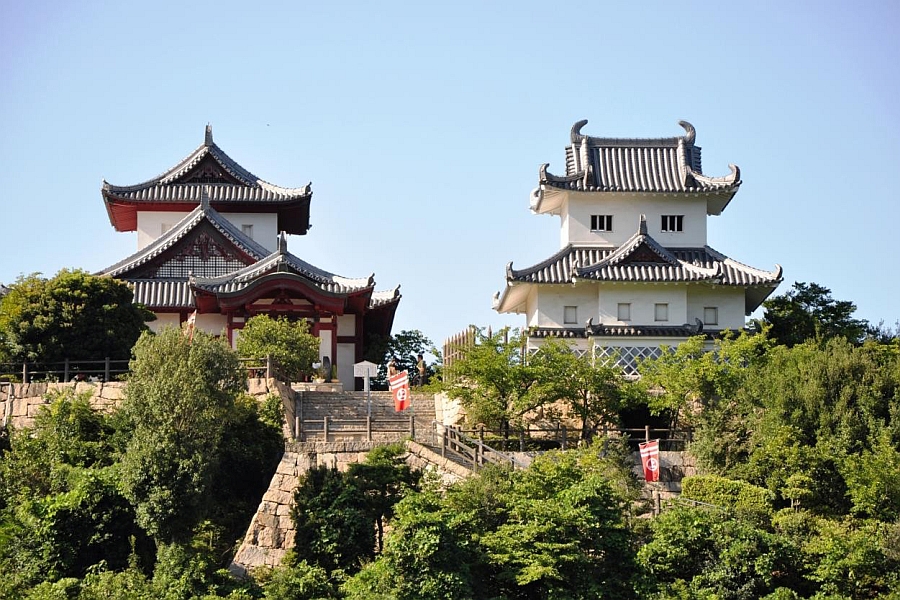
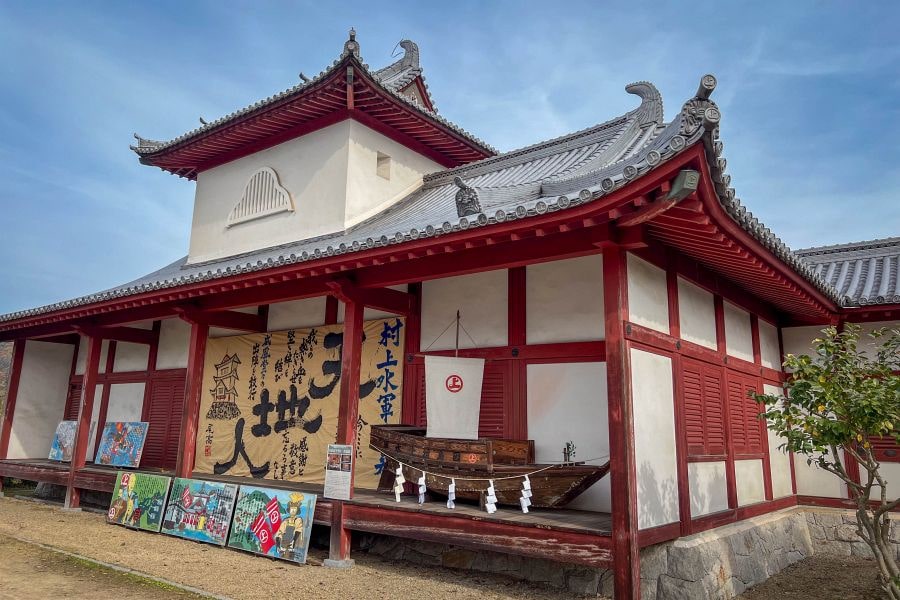
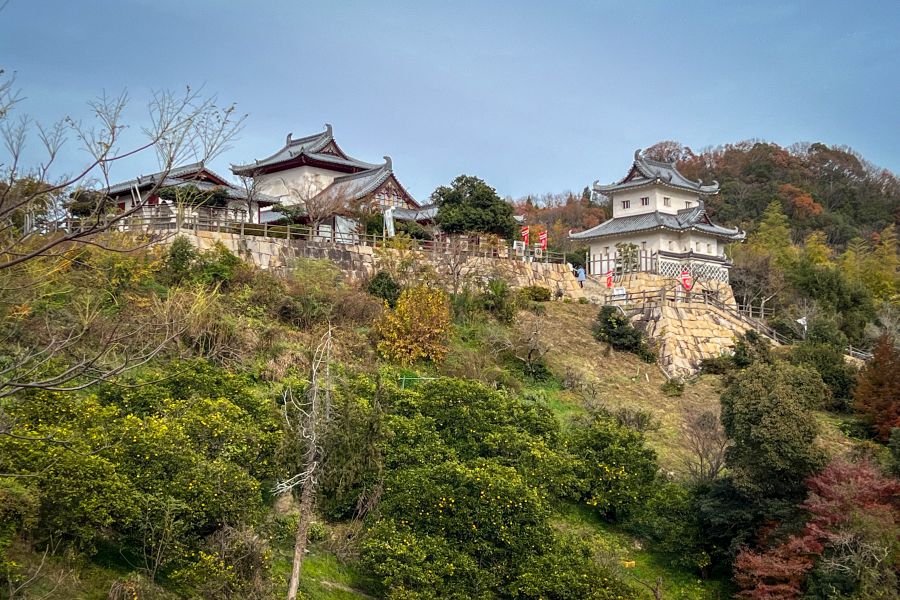
Innoshima Suigun Castle is a museum complex on Katagari-yama, a low hill in the Nakanoshō district of Onomichi. Built to resemble a traditional Japanese fortification, it serves as a museum of historical artifacts belonging to the Innoshima Murakami, a prominent maritime clan active across the Seto Inland Sea during the Muromachi and Sengoku periods. Built in 1983, the complex doesn’t occupy the site of a historical castle. It rather sits within the precincts of Konren-ji, the ancestral Buddhist temple of the Murakami clan. It documents the operational history, naval technology, and domestic life of these medieval seafarers.
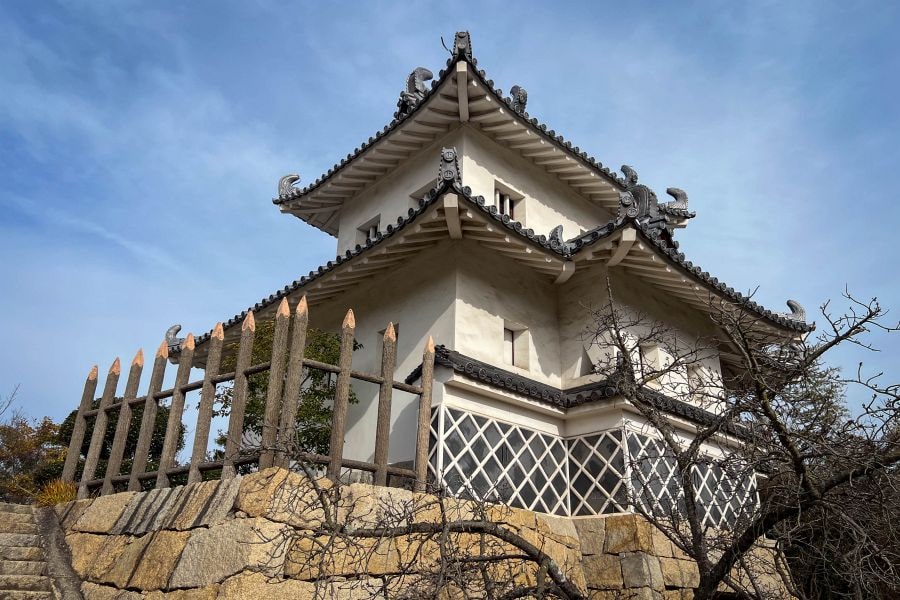
The complex comprises three distinct concrete structures arranged across the hilltop: the main hall, a corner watchtower, and a secondary hall. A long flight of stone steps ascends the hillside from Konren-ji, leading through a wooden gate into the upper compound. The upper pavilion of the main hall incorporates stylistic elements inspired by atakebune, the massive, armoured flagship vessels used by the Murakami fleet during coastal engagements. White-plastered walls, dark timber trim, and traditional tiled roofs give the buildings the outward appearance of a late-sixteenth-century hilltop fortress, providing elevated viewpoints over the surrounding valleys and coastal shipping lanes.
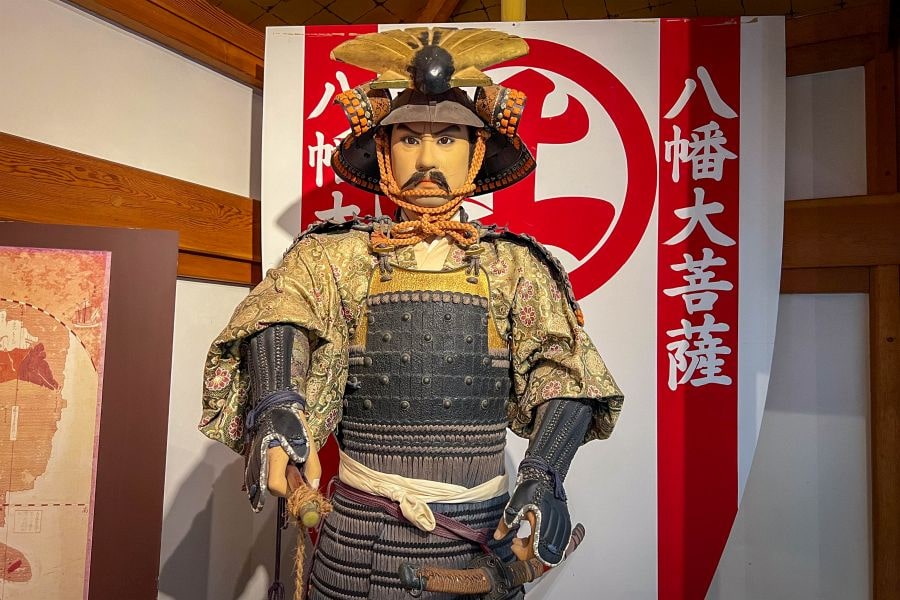
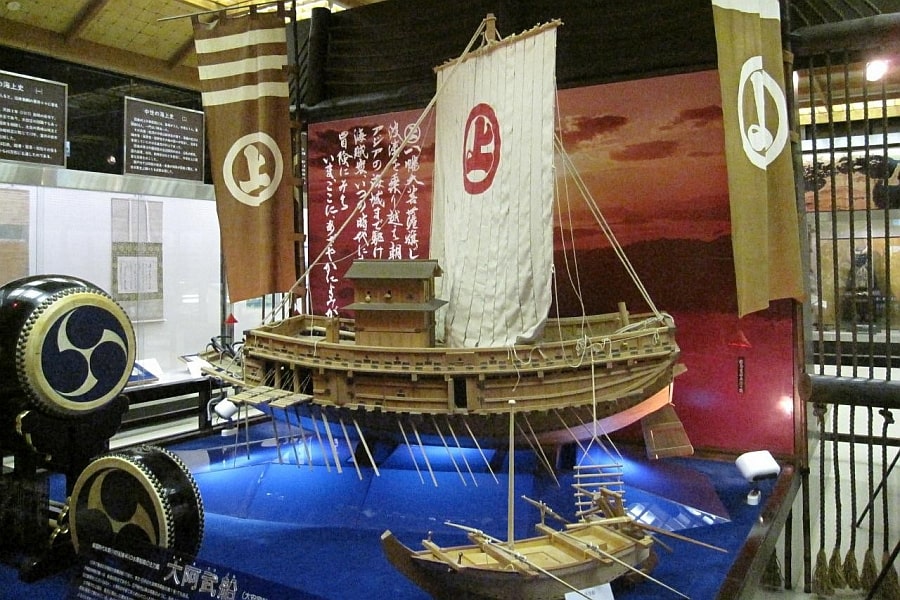
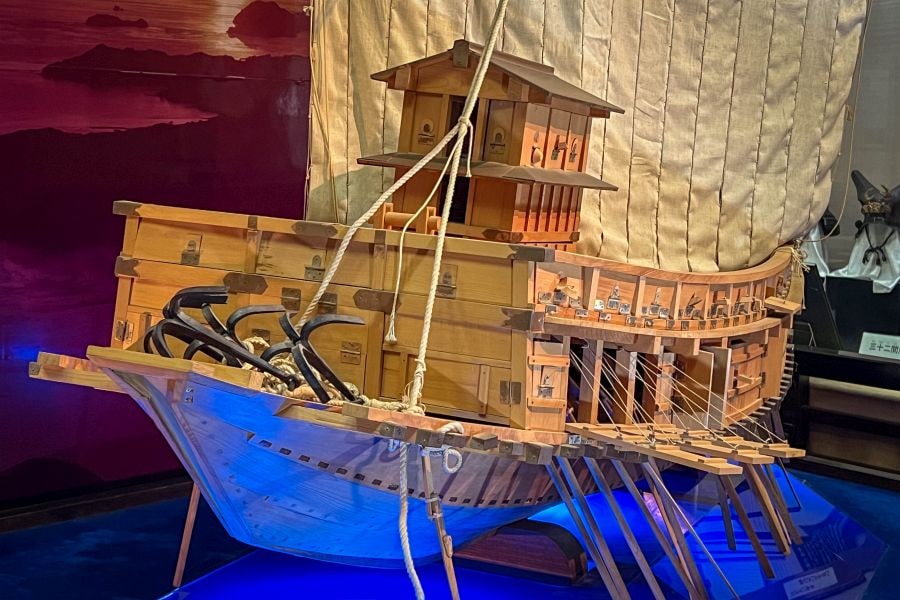
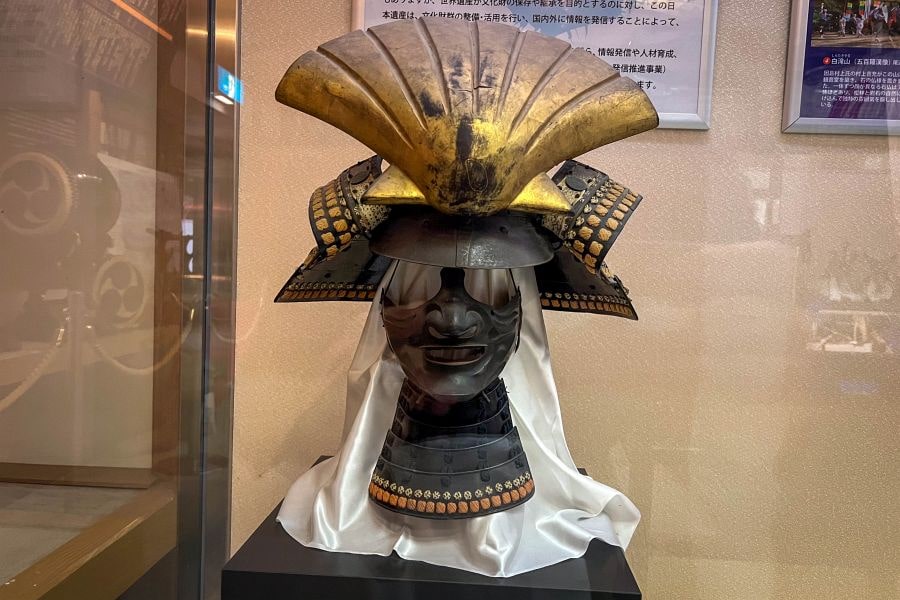
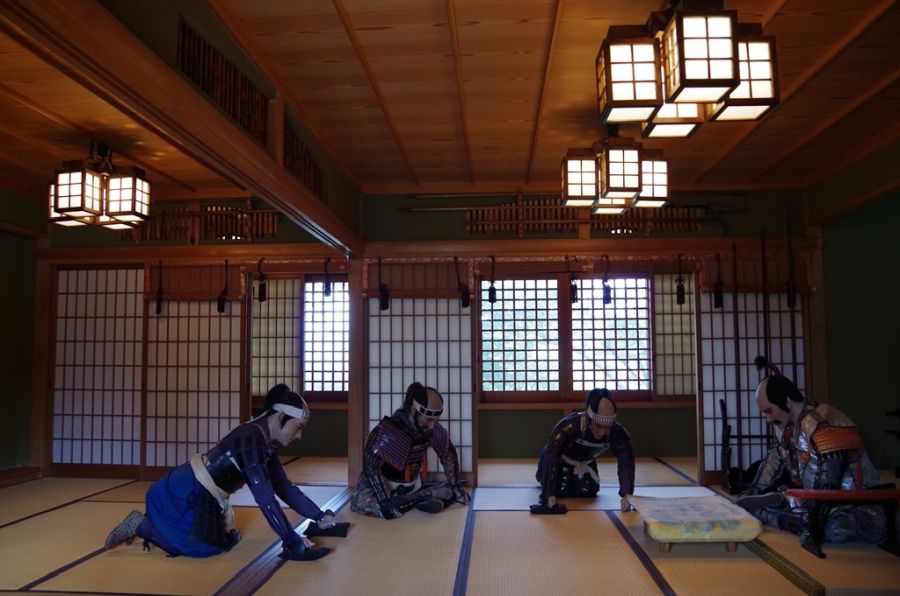
The interior of the main exhibition hall contains armour, weaponry, scrolls, and administrative documents passed down through the Innoshima Murakami lineage. Among the central exhibits is a red-, purple-, and white-laced chest armour dating to the late Muromachi period, presented to Murakami Yoshimitsu by the feudal lord Kobayakawa Takakage. Other items include early naval flags bearing the clan emblem, iron-headed spears, matchlock firearms, and roof tiles salvaged from Konren-ji. One notable tile, inscribed by Murakami Yoshisuke in 1450 before firing, bears names that demonstrate long-distance religious ties extending to Mount Daisen in Hōki Province. Detailed ship models inside the watchtower display the hull designs and rowing arrangements of the small, fast kohaya and medium-sized sekibune war galleys.
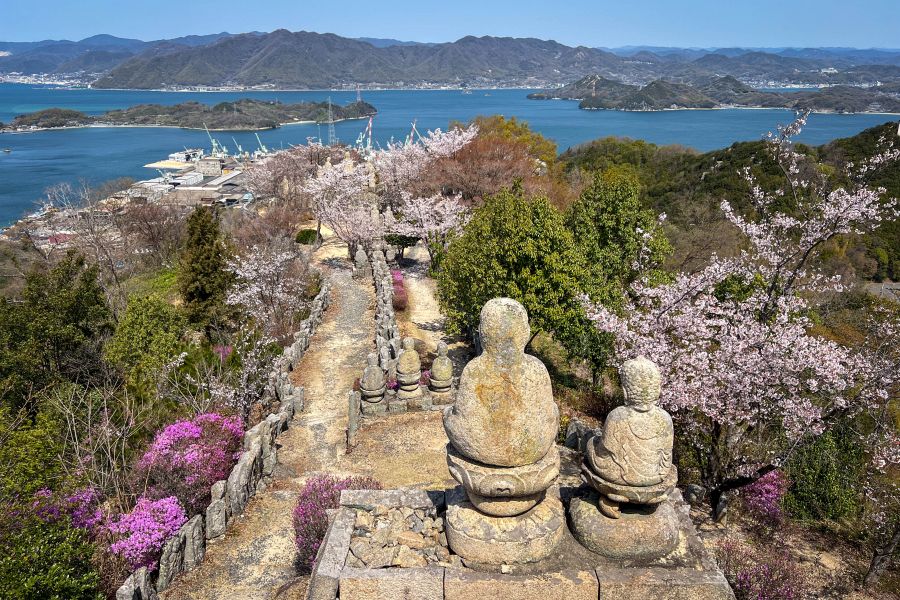
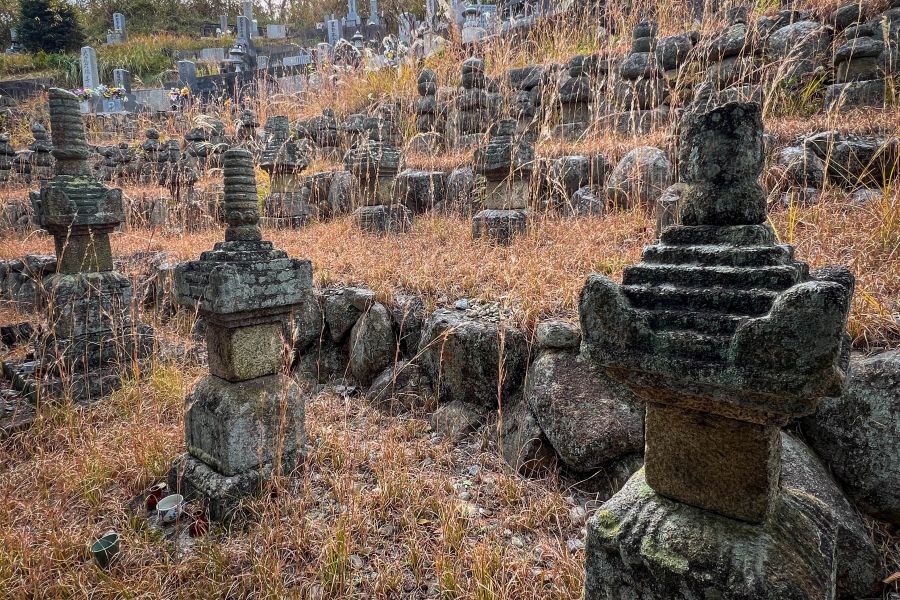
Historically, the Murakami were divided into three main branches based on the islands of Innoshima, Noshima, and Kurushima. Far from being lawless raiders, these groups operated as organized maritime authorities, enforcing navigational order, conducting trade, and offering armed escort services to passing merchant ships in exchange for toll payments. The Innoshima branch allied closely with regional land powers, including the Mōri and Kobayakawa clans, acting as a specialized navy during territorial disputes throughout the sixteenth century. Directly below the castle grounds, Konren-ji houses the stone grave monuments of successive Innoshima Murakami commanders, marking the site’s authentic historical connection to the clan.
Information
Name in Japanese: 因島水軍城
Pronunciation: in-no-sheema suigun jō
Address: 3228-2 Innoshima Nakanosho–chō, Onomichi, Hiroshima 722-2211