Matsuyama Fighter Shelters
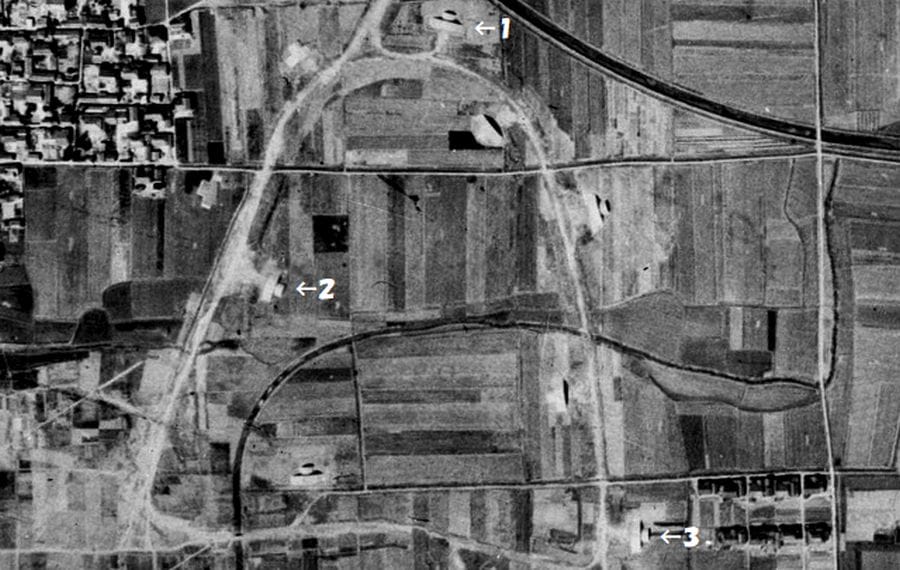
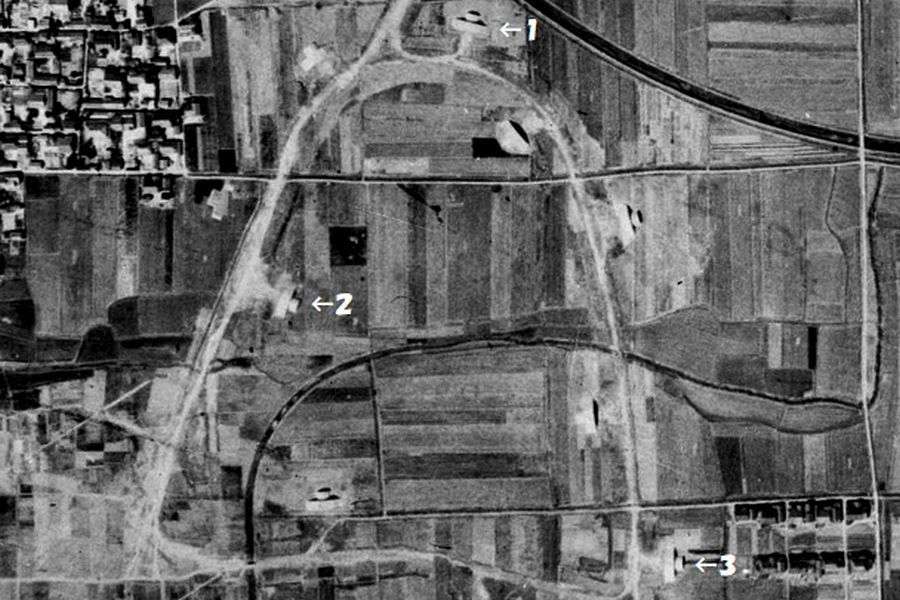
Reinforced concrete fighter shelters, named entaigō in Japanese, stand amidst the residential streets and fields surrounding Matsuyama Airport. These concrete revetments served as blast-proof hangars to protect military aircraft from Allied bombing during the final years of WWII. Three concrete structures remain standing today out of more than sixty original shelters that once dotted the local agricultural fields and military installations. Built by the Imperial Japanese Navy between 1943 and 1945, these surviving structures demonstrate the improvised civil engineering techniques used around military airfields as the air war intensified, though most didn’t survive post-war urban expansion.
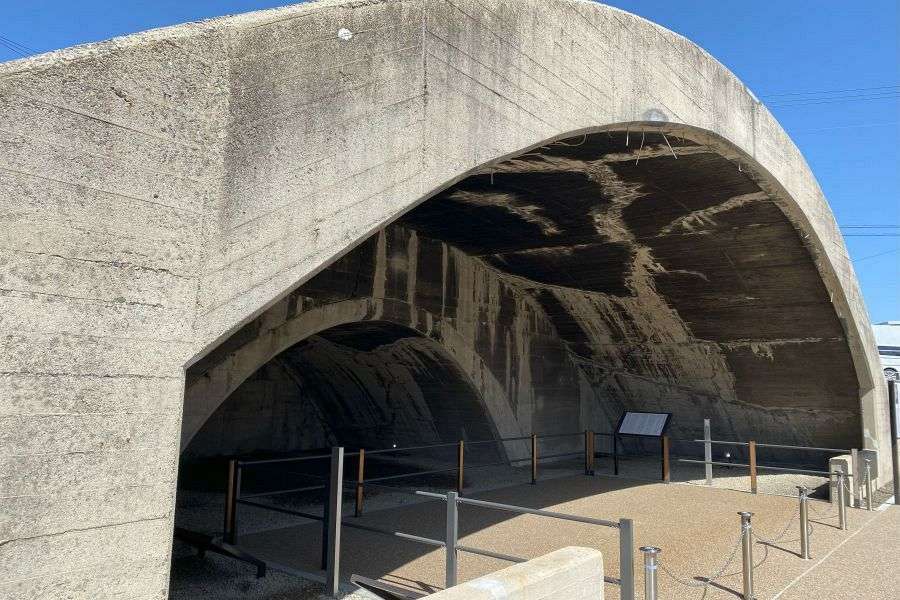
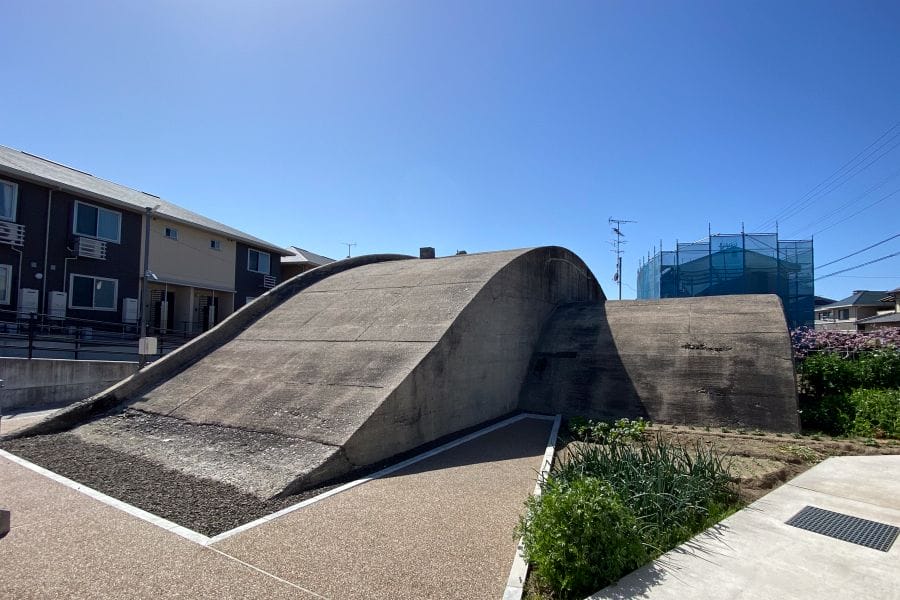
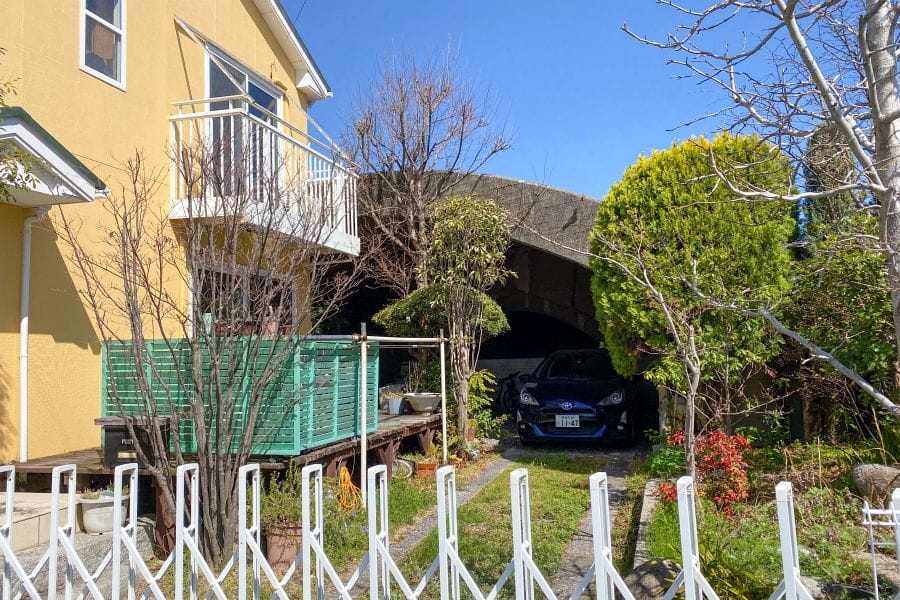
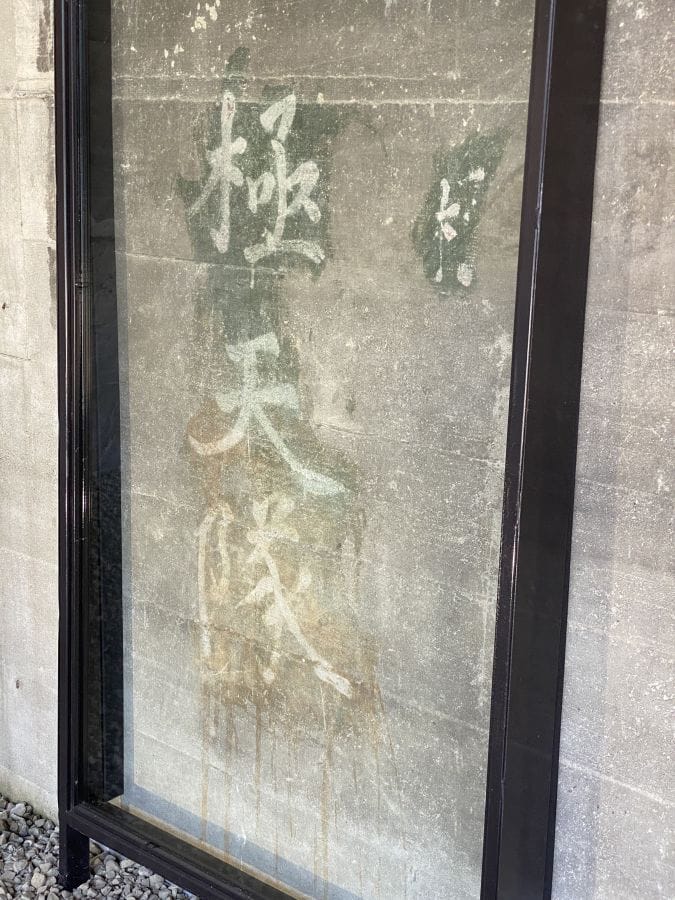
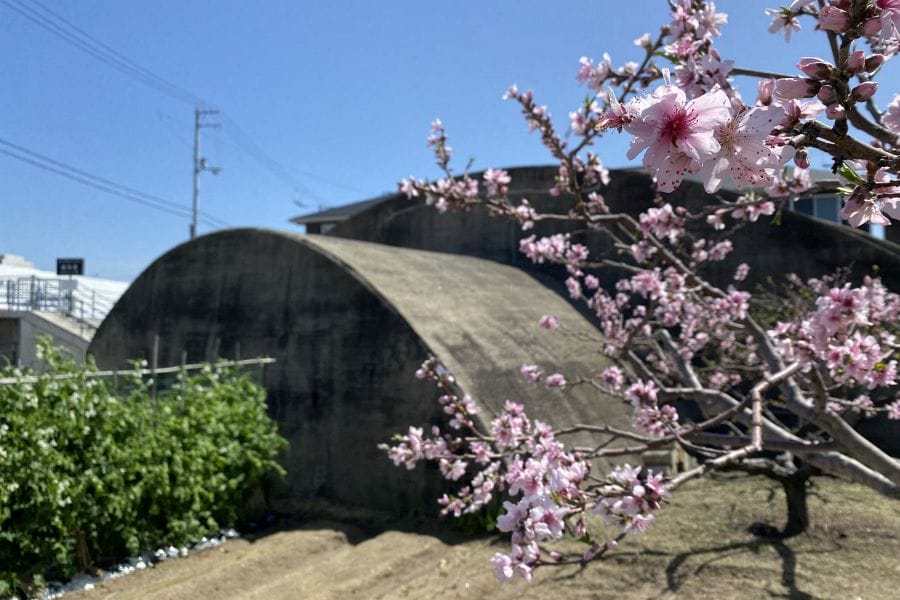
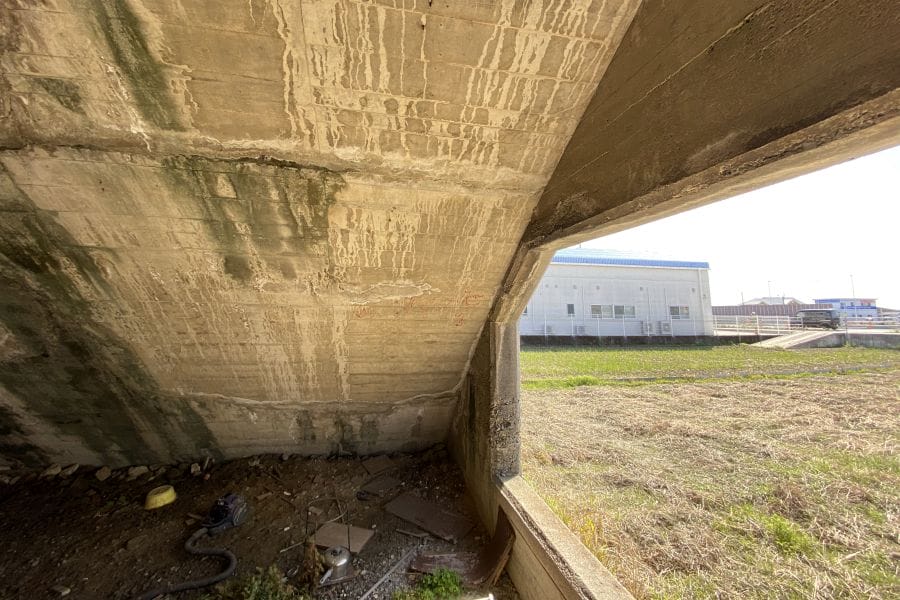
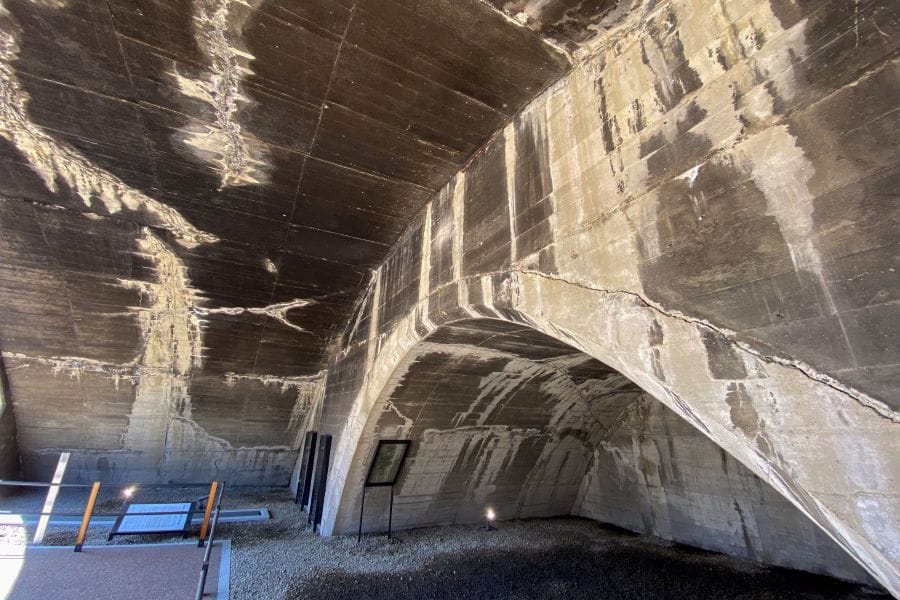
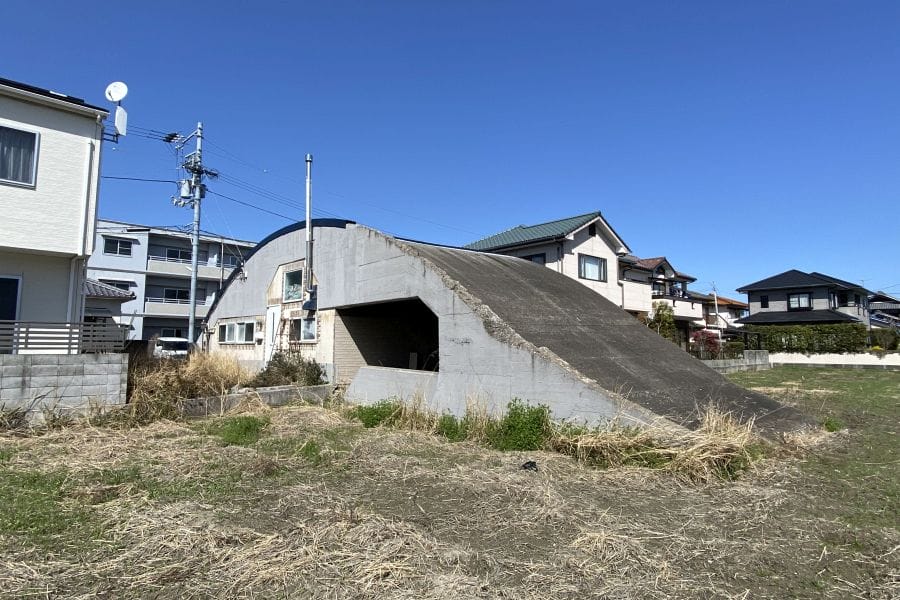
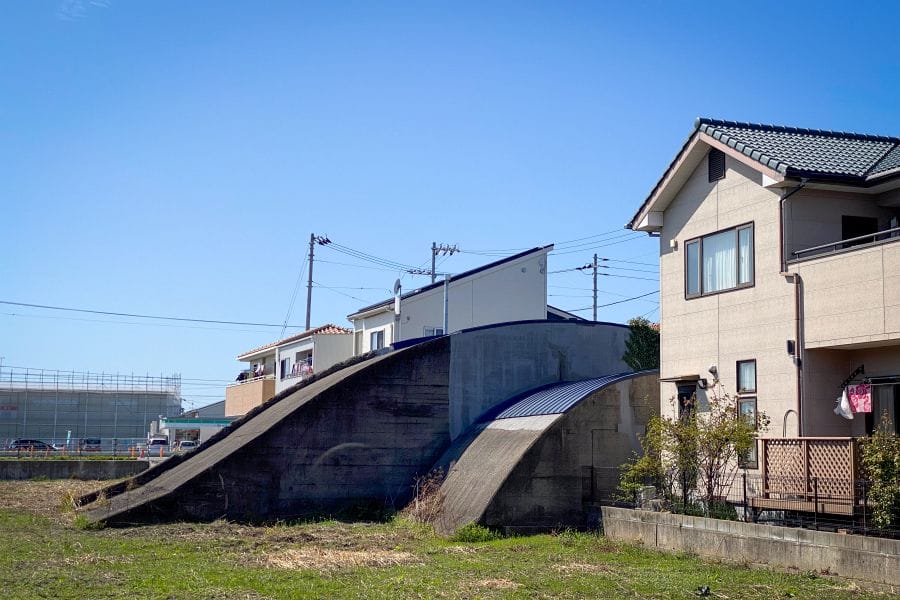
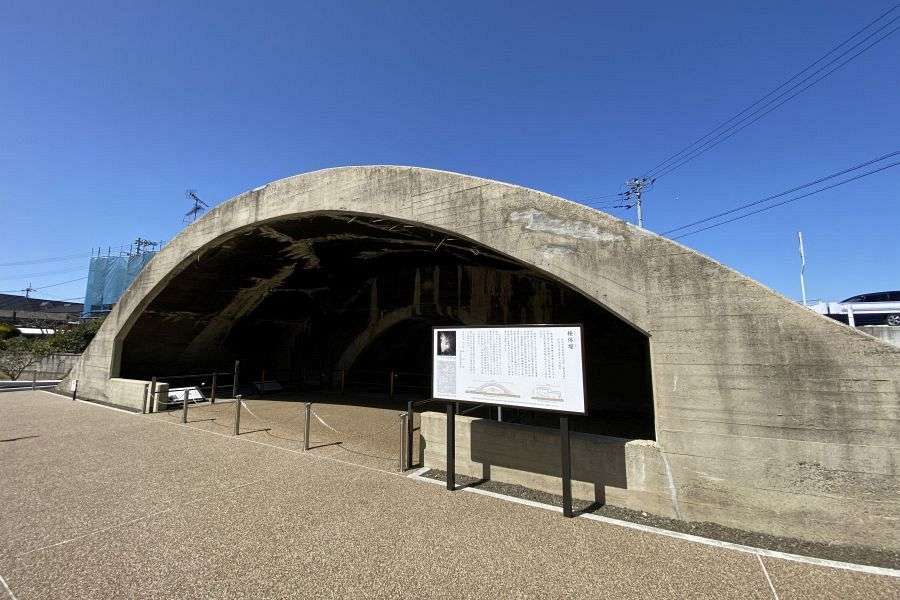
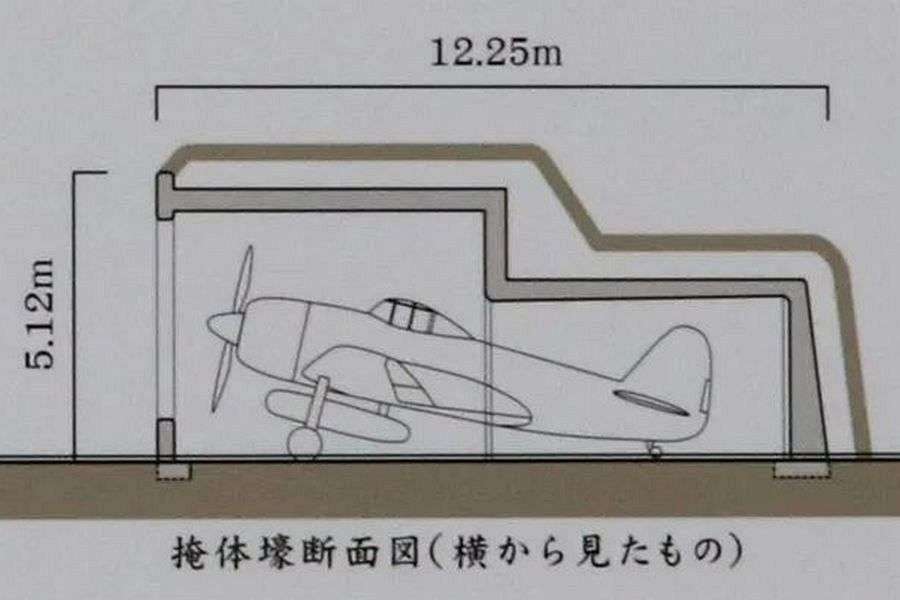
The main preserved shelter, designated a municipal cultural property by Matsuyama City, displays the raw, textured surface of wartime concrete construction. Its exterior consists of two arch sections: a broad front vault to house aircraft wings and a lower, narrower rear tunnel to accommodate the tail. Small stone fragments, river gravel, and board marks from coarse timber formwork remain visible across the concrete shell. Characters painted by the airmen are protected by plastic sheeting. The remaining two shelters stand nearby on private land, absorbed into the modern suburban landscape. One functions as a car garage for an adjacent house, while the other incorporates corrugated metal sheets, a wooden door, and metal chimney, serving as some sort of private den.
These shelters supported the operations of the Matsuyama Naval Air Group and the 343rd Naval Air Group, an elite fighter unit equipped with Shiden-Kai interceptors formed in early 1945 to defend western Japan against Allied bombing. Construction relied on local civilian labour, conscripted students, and military personnel who built earth mounds into the shape of airplane fuselages, placed timber boards over the soil, and poured concrete over the frames before excavating the dirt from within. Following the surrender of Japan in August 1945, the naval base transitioned into civilian farmland and eventually today’s airport. Because municipal authorities and private landowners couldn’t justify the high cost of demolishing such thick reinforced concrete, these three structures survived while lighter surrounding facilities were dismantled.
The preserved shelter sits on an open plot beside the main road, allowing views into its interior vault. Explanatory signboards at the site detail the historical development of the former naval air station and the 1945 air attacks on the airfield. The contrast between these heavy military structures and the surrounding family houses and apartments illustrates the post-war conversion of military property across suburban Japan.
Information
Name in Japanese: 掩体壕
Pronunciation: entaigoh
Address: 1020-10 Minamiyoshidamachi, Matsuyama, Ehime 791-8042