Hikawa Shrine
Musashi Ichinomiya Hikawa Shrine is an ancient Shintō complex in the city of Saitama, dedicated to the major deity Susanoo. It’s the head sanctuary for some two-hundred and eighty Hikawa branch shrines across the Kantō region. The site gives the surrounding district of Ōmiya (great shrine) its name.
What to see
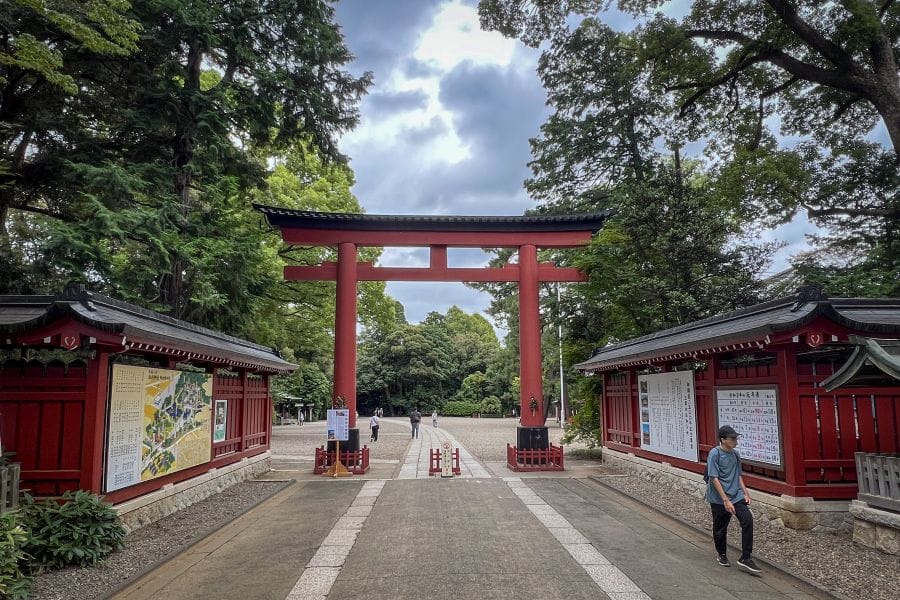
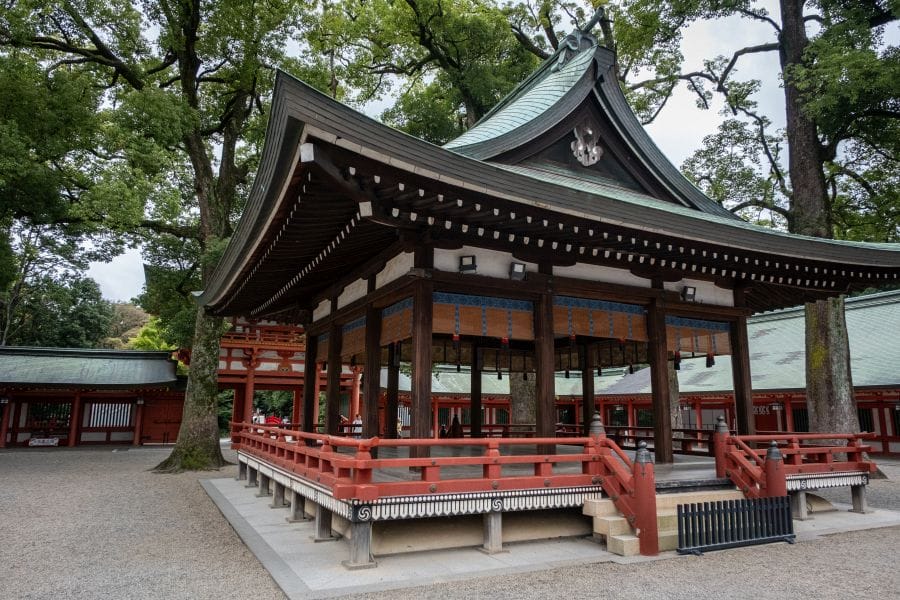
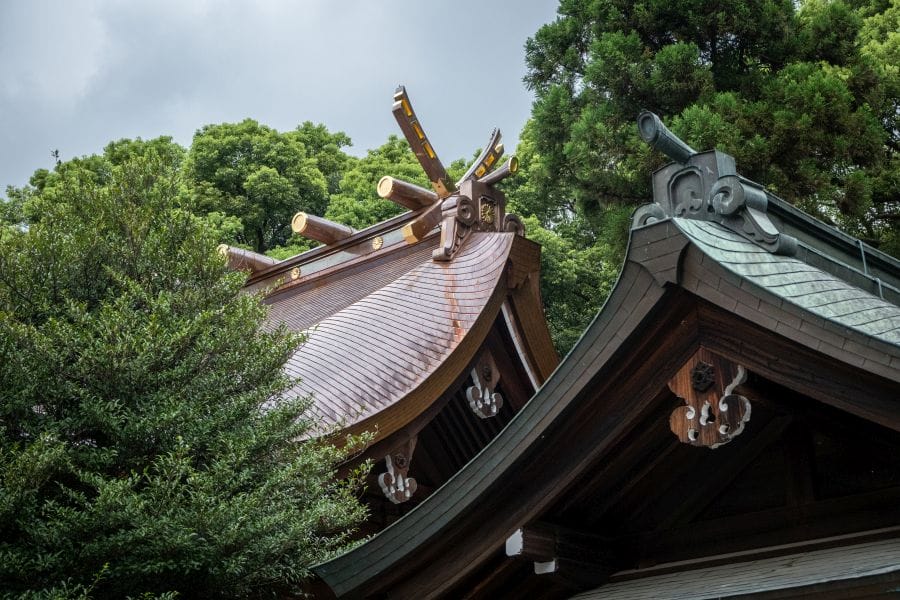
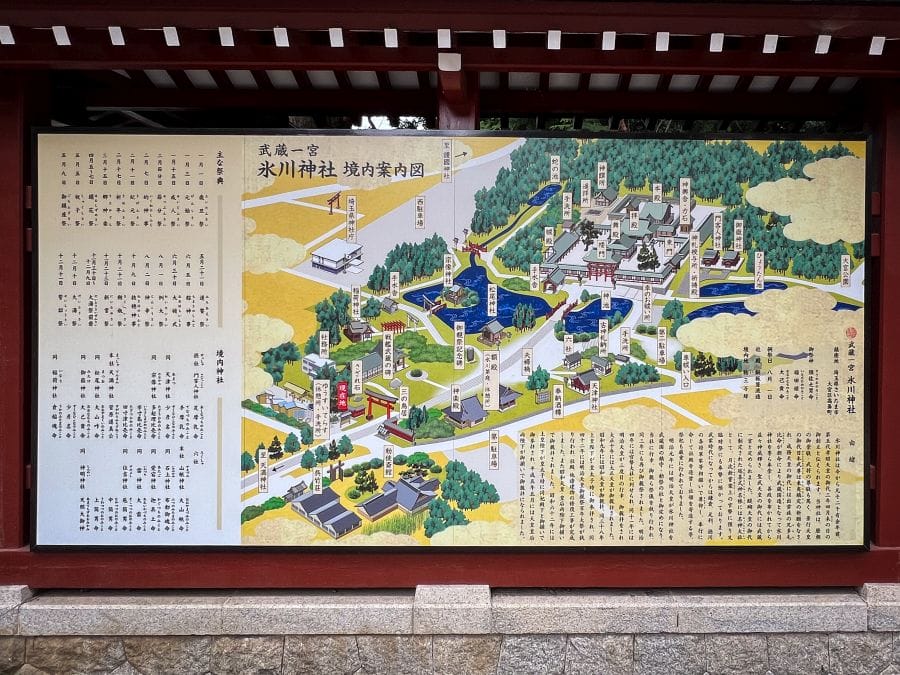
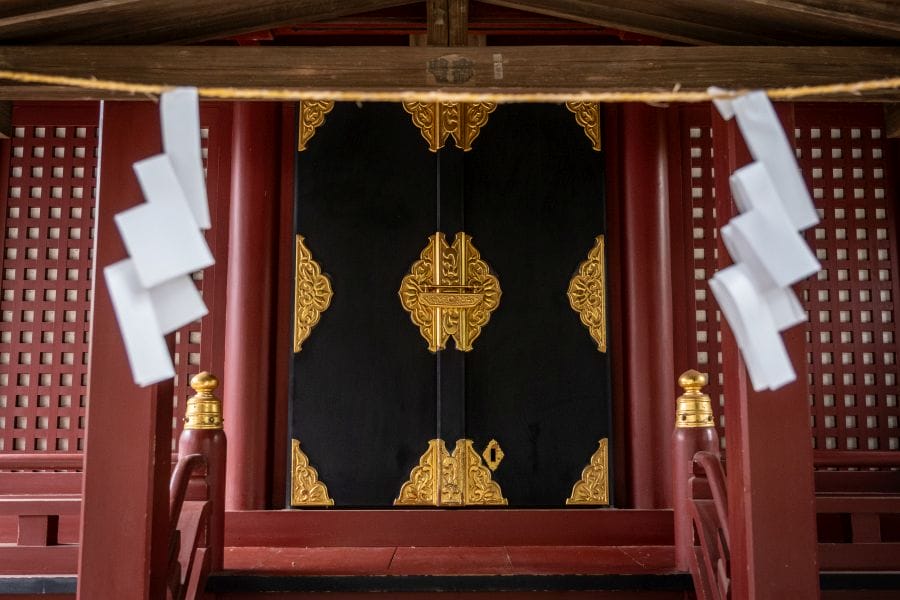
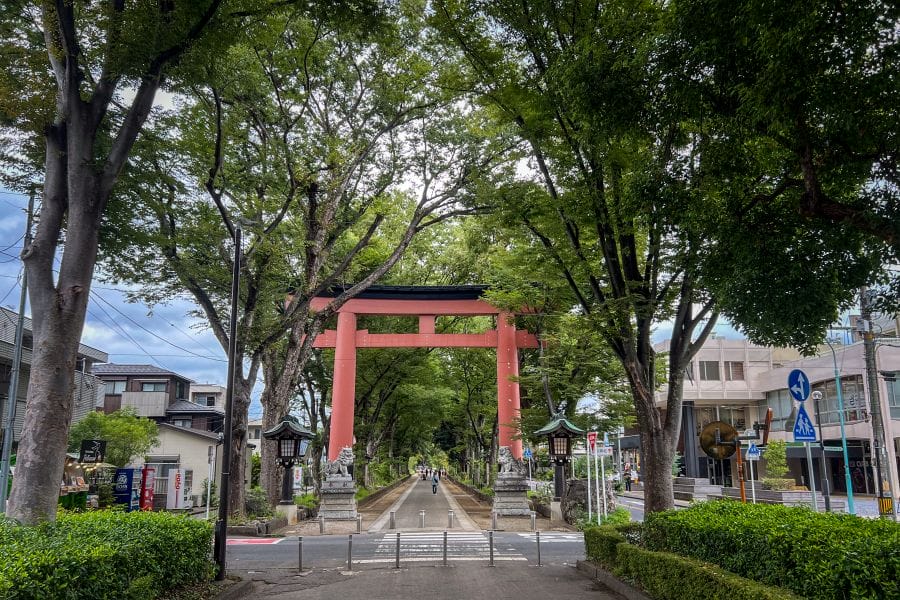
A straight two-kilometre pedestrian approach called the Hikawa Sandō leads north from the historic Nakasendō highway to the shrine grounds. Tall trees shade the pathway, which passes beneath three big torii gates. The second gate was built using a 1,300-year-old Japanese cypress relocated from Tokyo’s Meiji Shrine in 1976. At the northern end of the avenue, a red bridge crosses a sacred pond into the main precinct. An impressive two-storey vermilion gate opens into a wide courtyard containing an open-air dance stage, a worship hall, and an inner main sanctuary. Rebuilt in 1940 during a national reconstruction project, the principal wooden structures display the classical nagare-zukuri style, with asymmetrical copper-plated gables extending forward over the front steps.
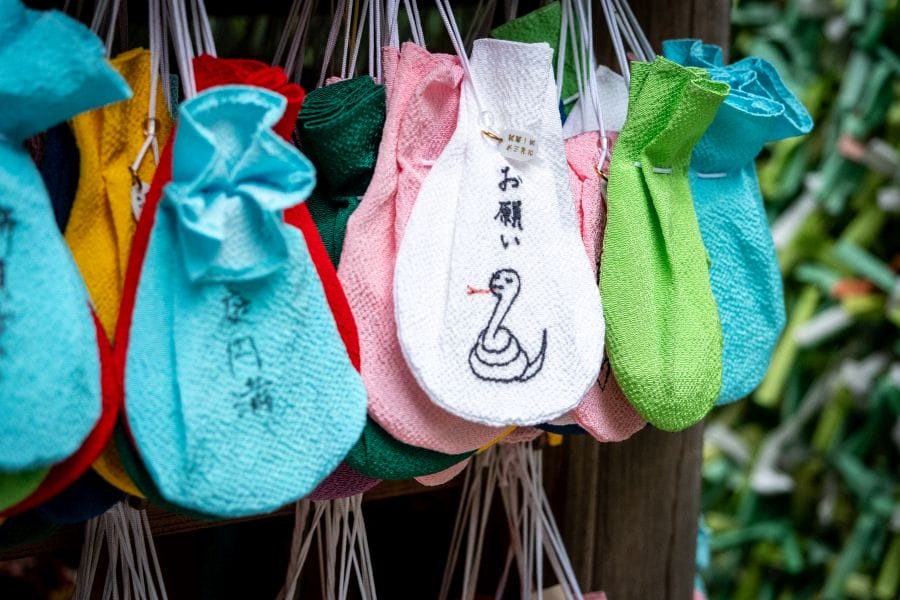
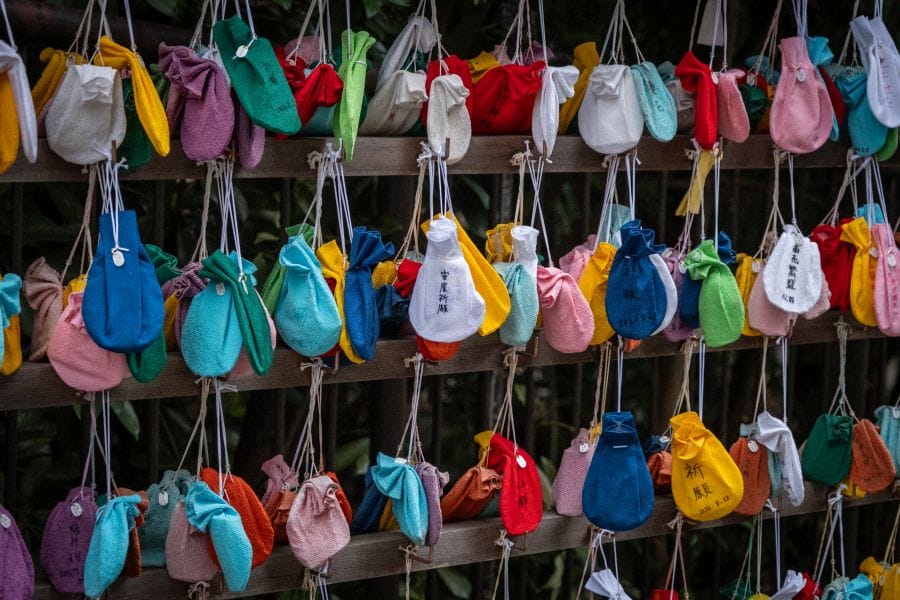
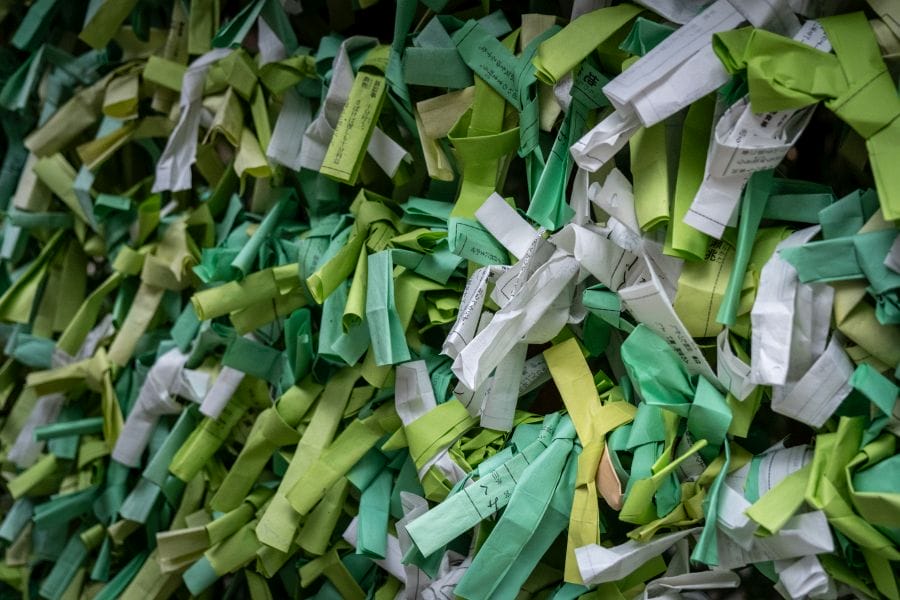
Most shrines offer ema wooden plaques for worshippers to write their prayers on and hang in the shrine grounds. Japanese deities apparently need to know your full name and address so that they don’t deliver the good things to the wrong person, but in recent years, this has become a privacy concern. Hikawa Shrine addressed this by offering colourful cloth bags called fukuro ema with a bit of cardboard inside for writing the secret wish. Nevertheless, many users don’t get it and continue to write their wishes on the bag itself. The colourful pouches are a pretty sight against the dark green of the compound’s abundant foliage.
History
Shrine traditions trace the sanctuary’s origin to 473 BC, during the reign of Emperor Kōshō, when emigrants from the Izumo region introduced the worship of Susanoo to the Musashi plain. Historical records document the site as the premier shrine of Musashi Province, a domain encompassing modern Tōkyō, Saitama, and parts of Kanagawa. Military rulers patronised the sanctuary, and figures like Minamoto no Yoritomo in 1180 and Shōgun Tokugawa Ieyasu in 1595 funded extensive rebuilds. The complex gained elevated civic importance following the Meiji Restoration of 1868. When Emperor Meiji moved the imperial capital from Kyōto to Tōkyō, he stopped at Hikawa Shrine to perform solemn rites, designating it as the primary imperial shrine of the Kantō region.
Legends
Behind the main precinct sits the Ja-no-ike, or Snake Pond, a natural spring that supplied fresh water to early agricultural communities and marks the physical origin of the shrine. Ancient belief linked this emerging spring water with serpent water spirits and Susanoo’s legendary defeat of the eight-headed monster Yamata no Orochi. The shrine’s official crest incorporates an eight-cloud motif flanked by aquatic plant leaves, referencing the vast Minuma wetland that encircled the surrounding plateau until eighteenth-century land reclamation projects drained the area. Traditional rituals continue on the grounds throughout the year, including torchlit Noh theatre performances held on the outdoor dance stage each May and the Daitō-sai winter festival every December.
Information
Name in Japanese: 氷川神社
Pronunciation: hi-kawa jin-ja
Address: 1-407 Takahana-cho, Ōmiya, Saitama 330-0803