Ōmiya Railway Museum
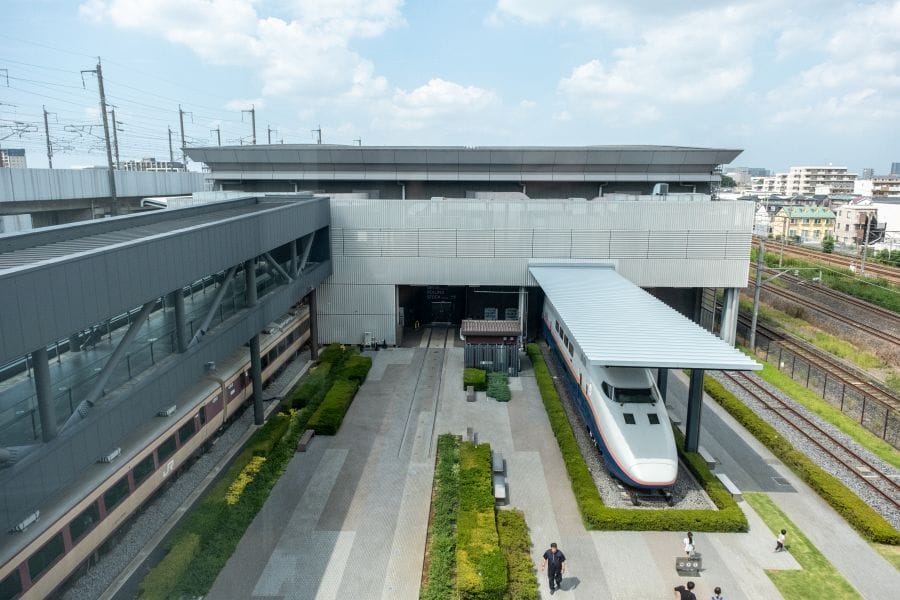
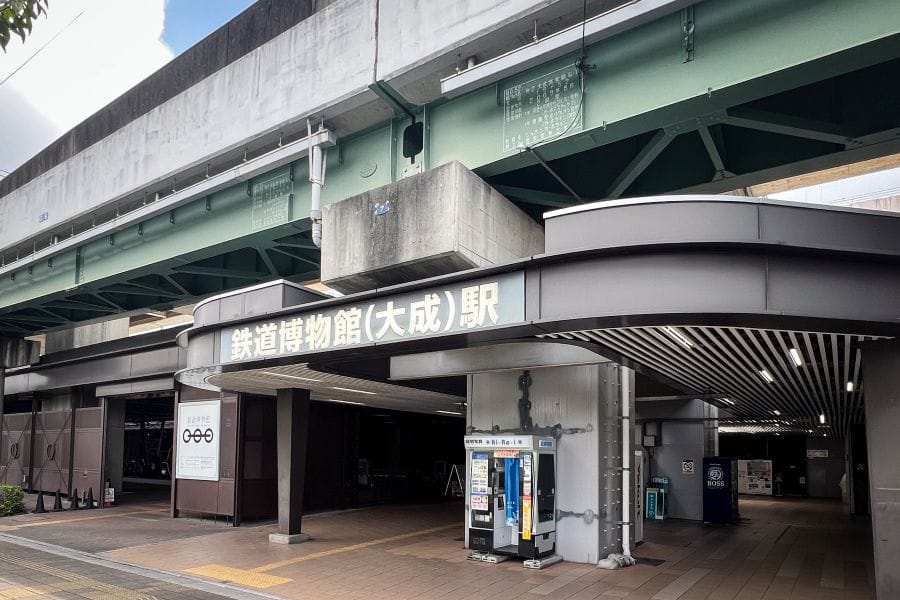
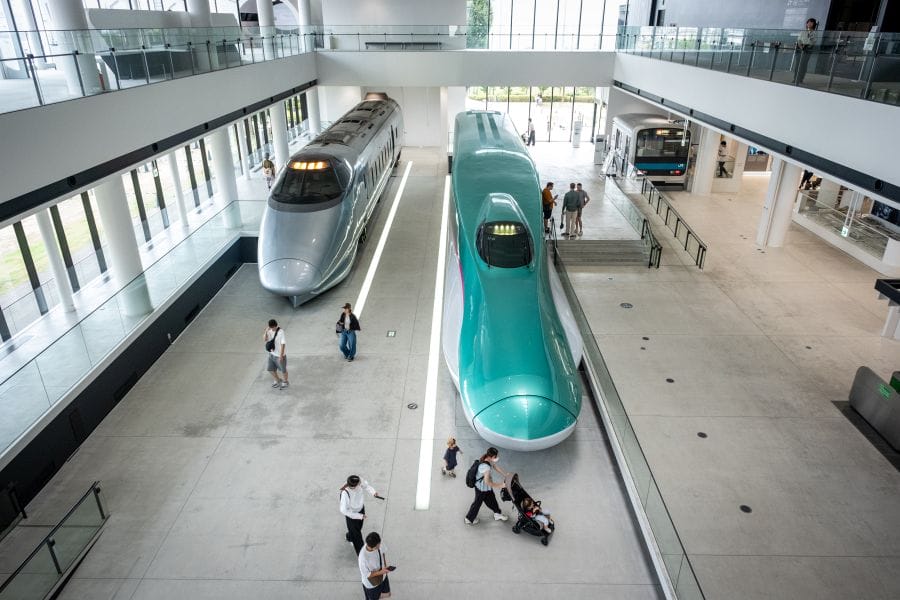
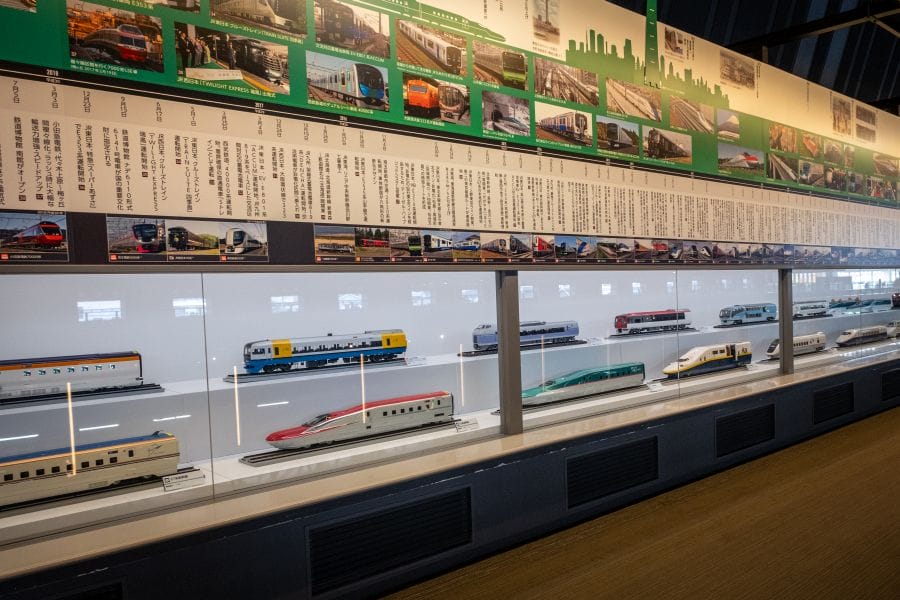
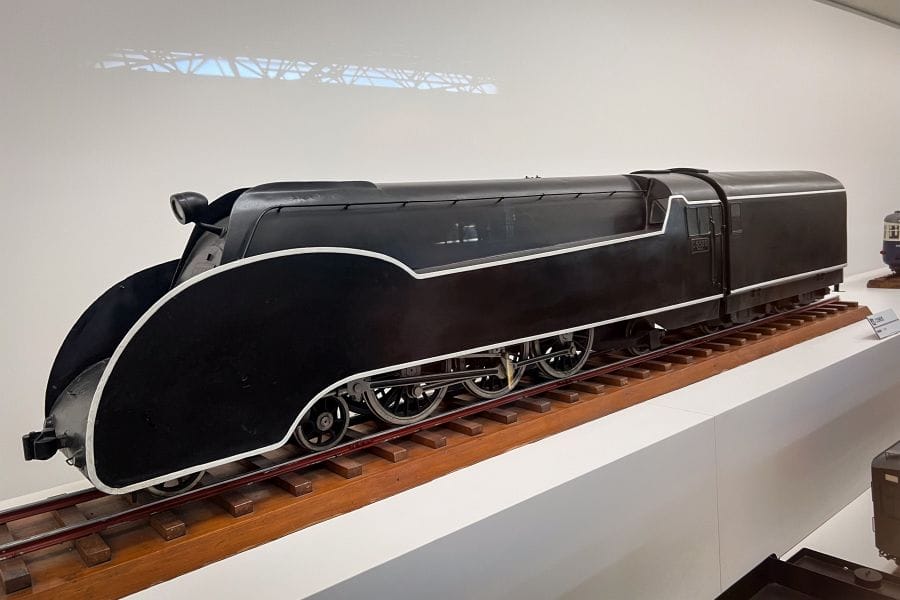
The Ōmiya Railway Museum is a transport exhibition and heritage facility managed by the East Japan Railway Culture Foundation. Built on former railyard grounds north of Ōmiya Station, the extensive complex extends alongside the elevated tracks of the Tōhoku Shinkansen and the New Shuttle transit system, where trains rattle by every few minutes. The layout consists of a massive, high-ceilinged Main Hall, a multi-storey South Wing, and open-air garden areas. The main hall has exhibition zones arranged by chronological theme and technology with many full sized engines and carriages combined with smaller exhibits in glass cases. Elevated walkways allow you to look down on the trains and visitors from above and enjoy the illusion that you’re looking at a living miniature.
What to see
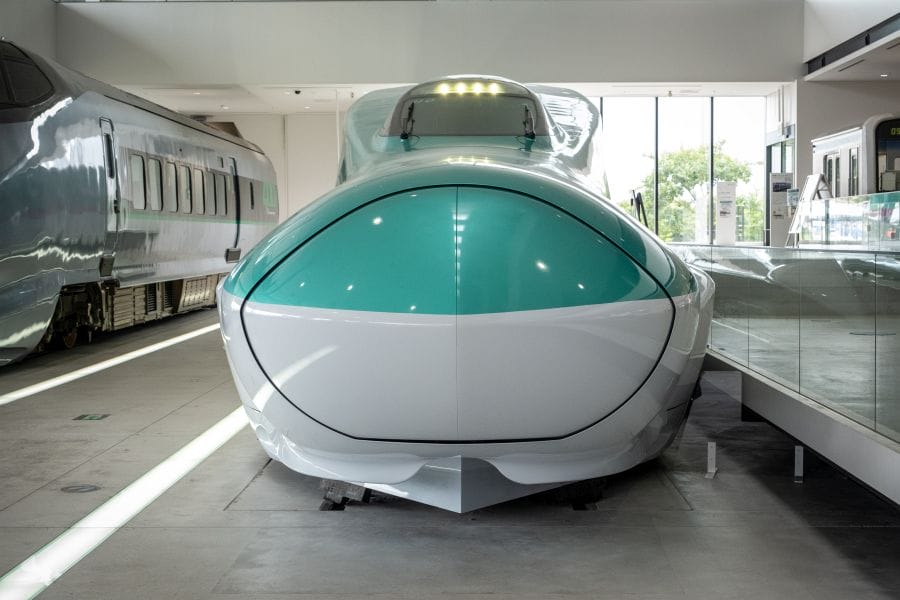
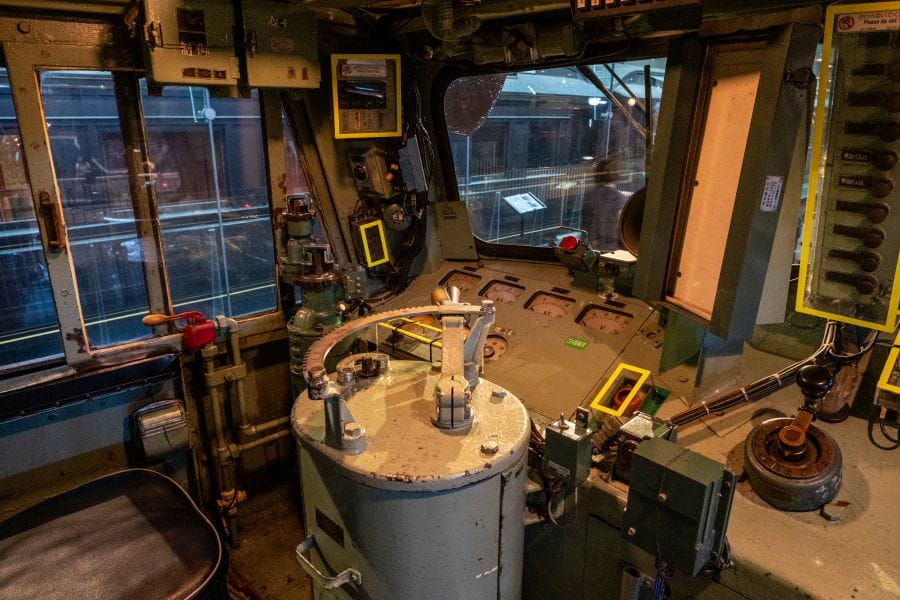
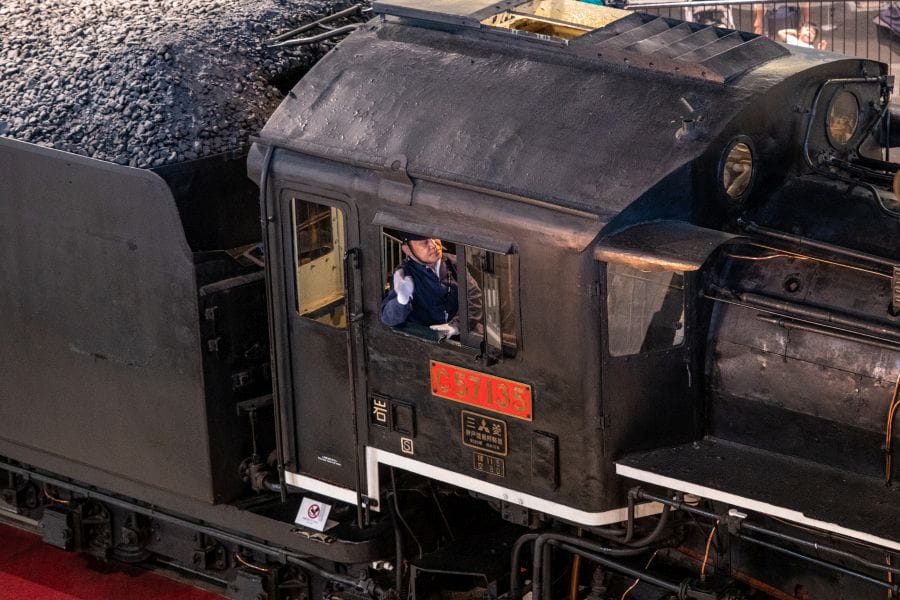
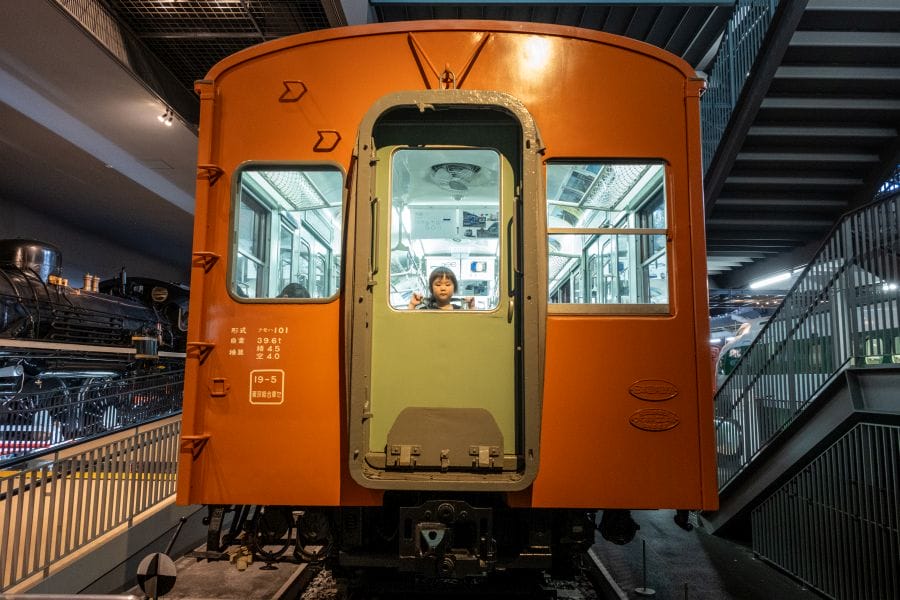
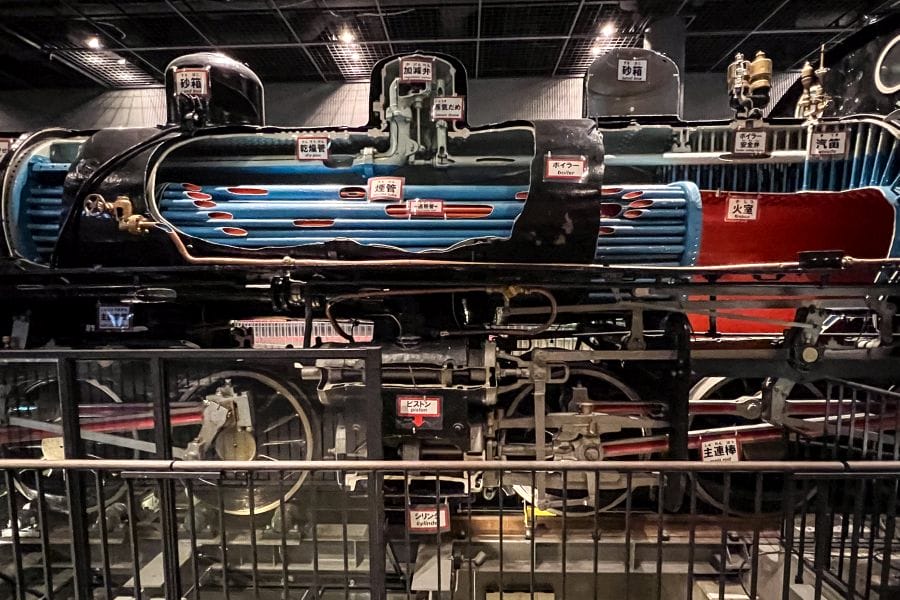
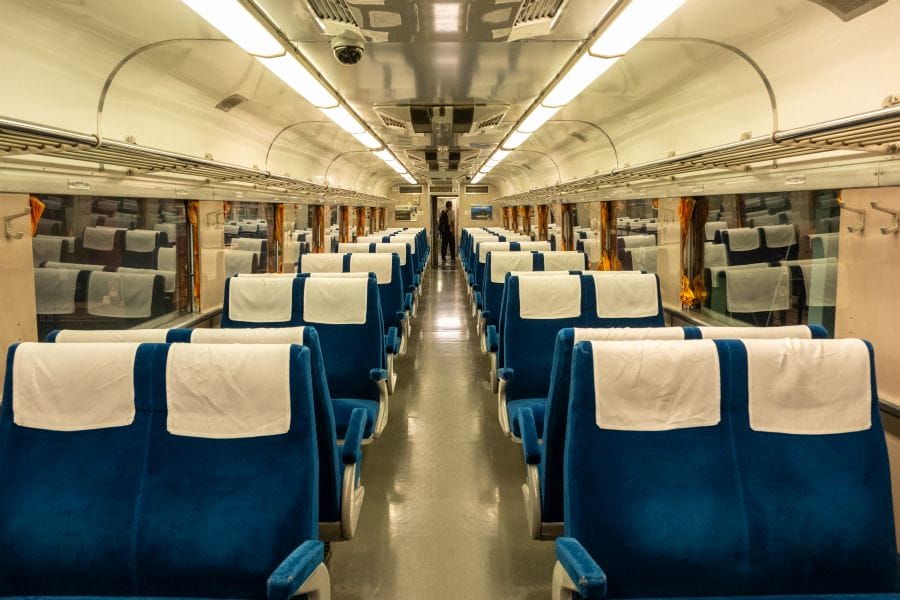
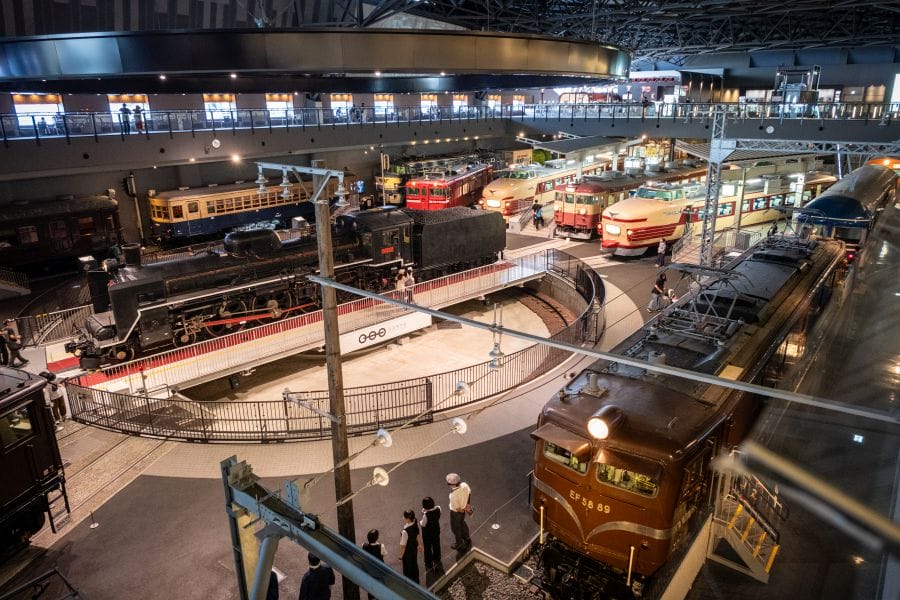
The central hall houses over forty actual railway vehicles representing major eras of Japanese transport history. At the centre of the ground floor, a full-size C57-class steam locomotive rests on a functional mechanical turntable, which is rotated at noon. The locomotive blasts its whistle as it slowly rotates, causing small children to cry. Its surrounded by radiating tracks displaying historic passenger cars, electric locomotives, and early express trains. The collection includes the 1872 British-built Locomotive No. 1, mid-century electric commuter trains, and pioneering high-speed trains such as the 0 Series and 200 Series Shinkansen. Interactive facilities include driving simulators, a two-hundred-square-metre model railway diorama, and an outdoor miniature circuit where scaled electric trains travel between mini station platforms.
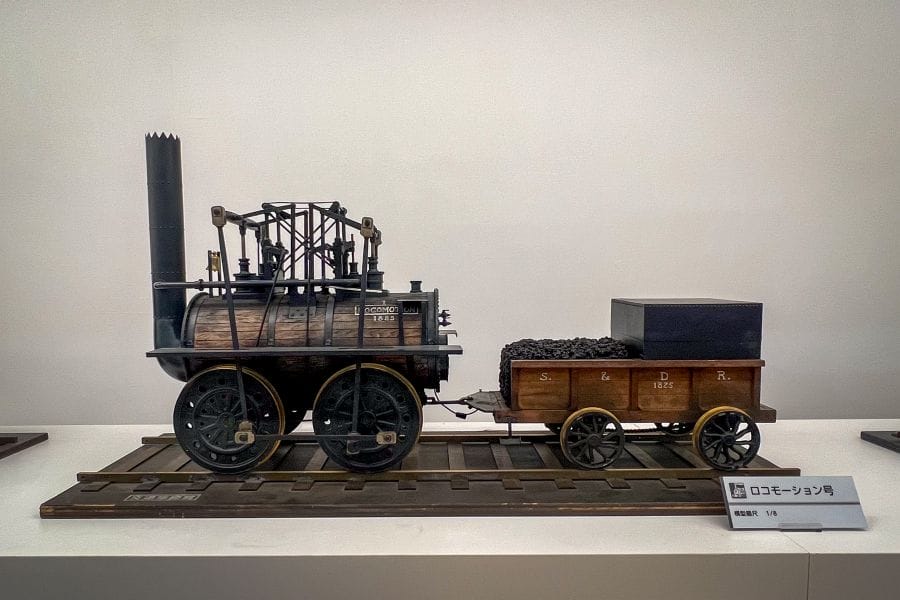
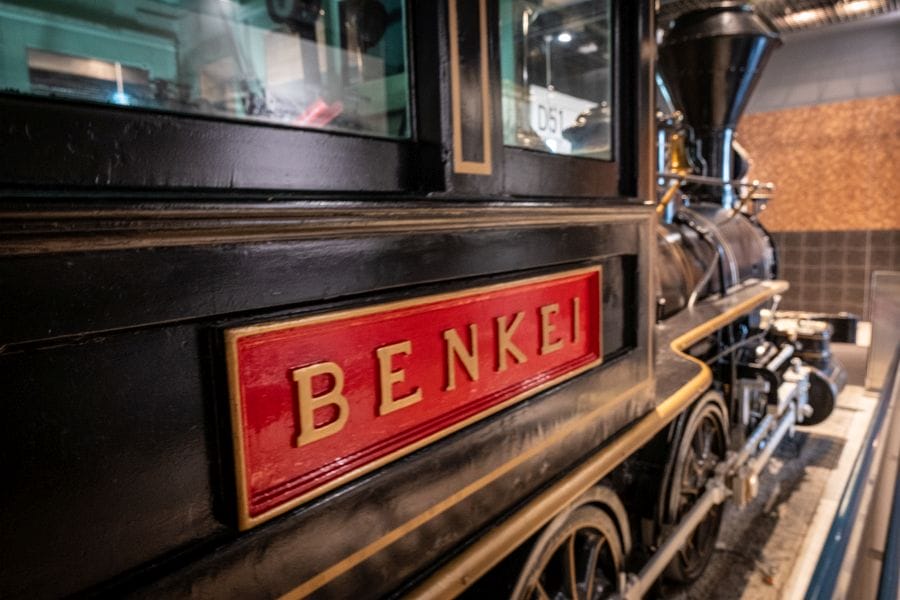
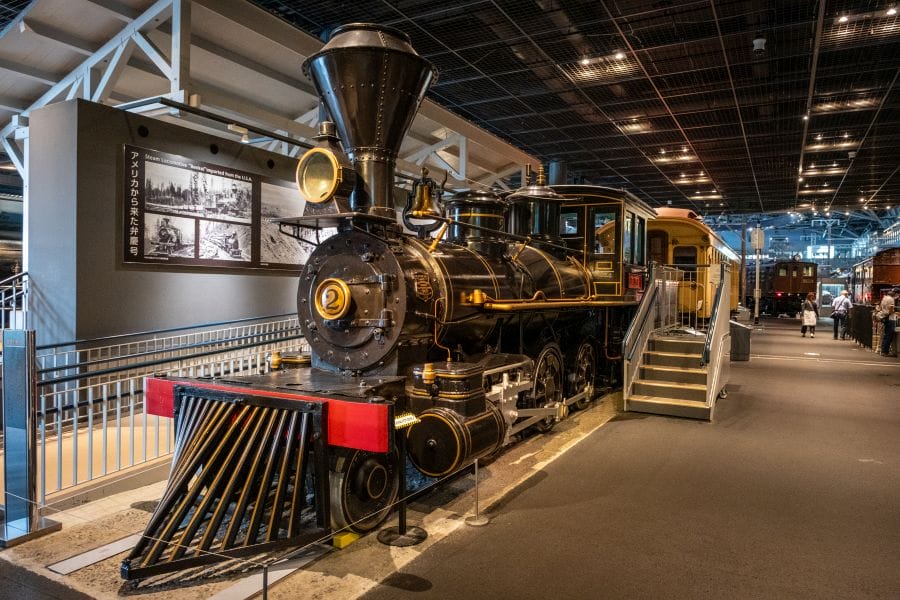
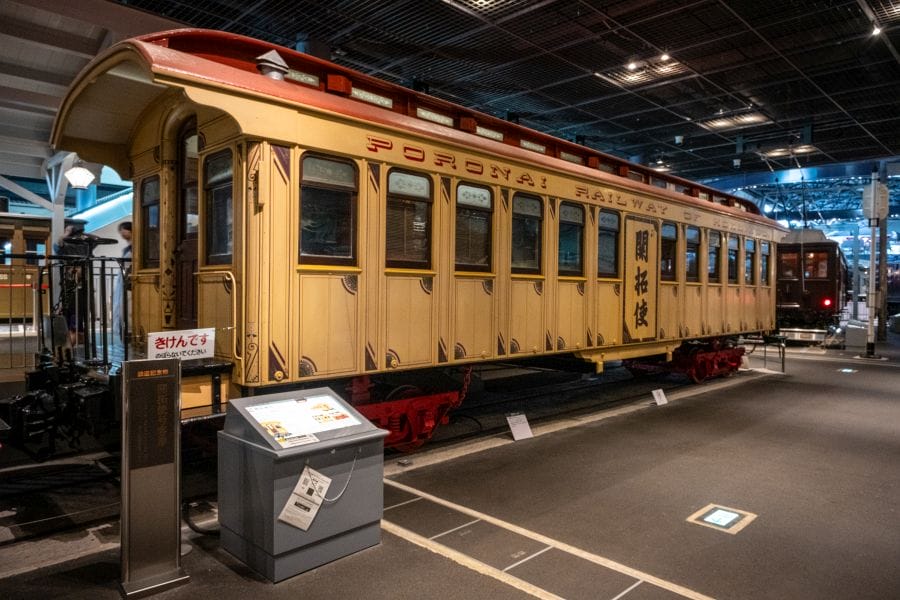
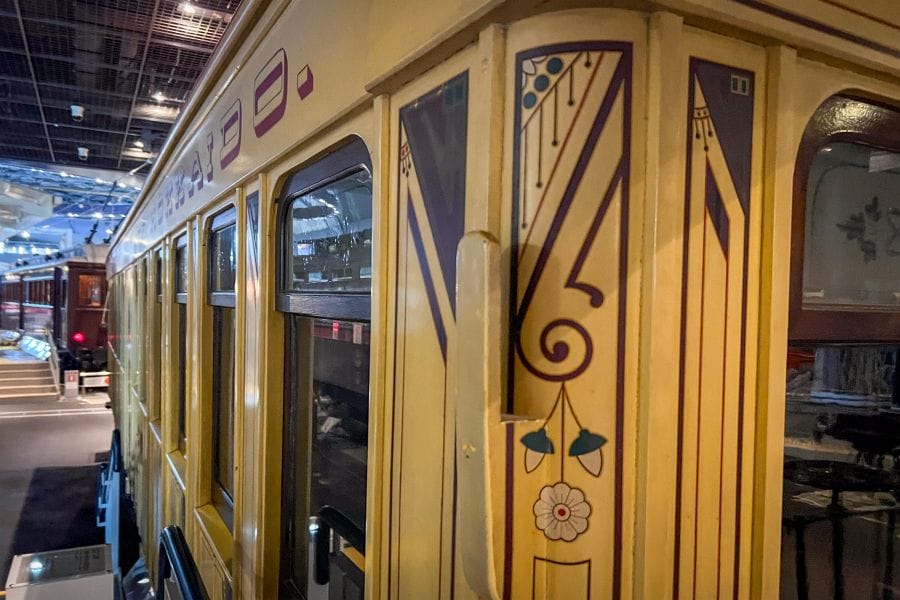
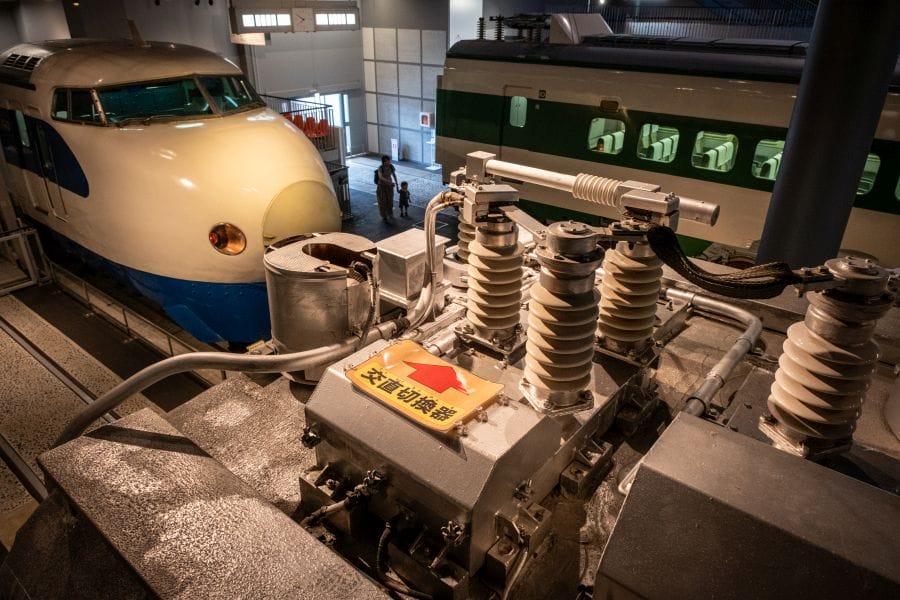
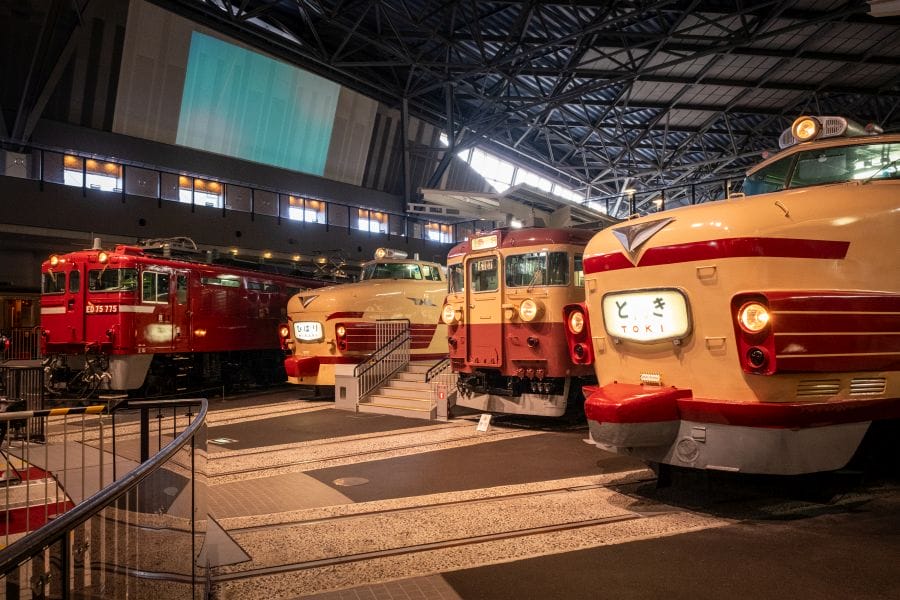
The exhibits document the development of Japan’s rail network from its Meiji-era beginnings through modern technological developments. Japan’s first railway line opened in 1872 between Shinbashi in Tōkyō and Yokohama, relying on steam locomotives imported from Great Britain. As domestic engineering matured during the Taishō and early Shōwa periods, electrification expanded across main trunk lines and steep mountain passes. The introduction of the Tōkaidō Shinkansen in 1964 established high-speed rail transit, transforming long-distance passenger movement and supporting post-war economic growth across the country.
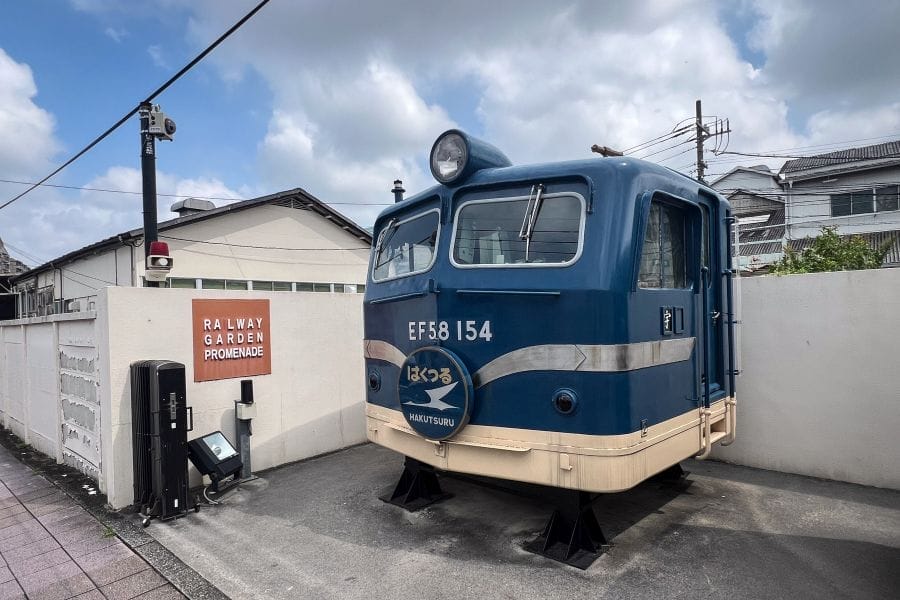
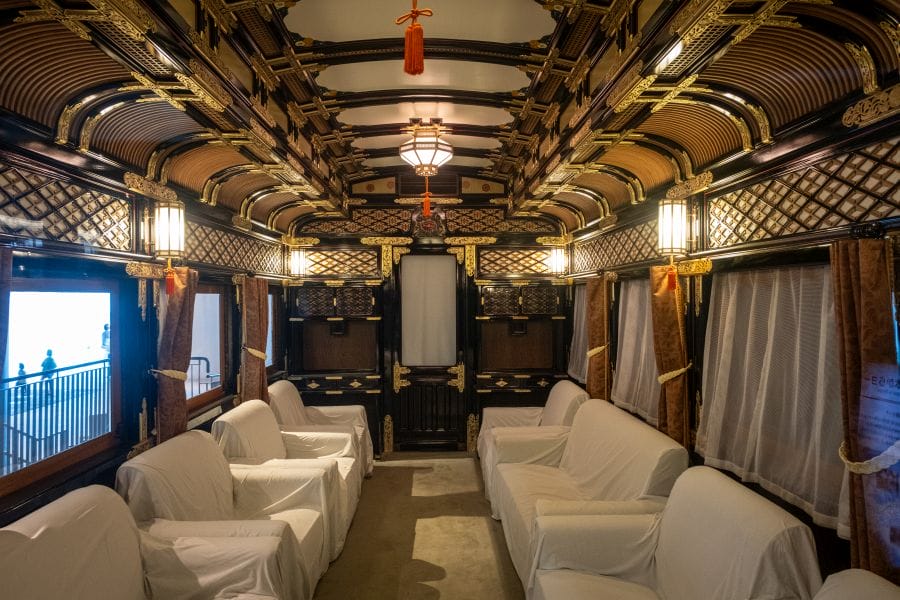
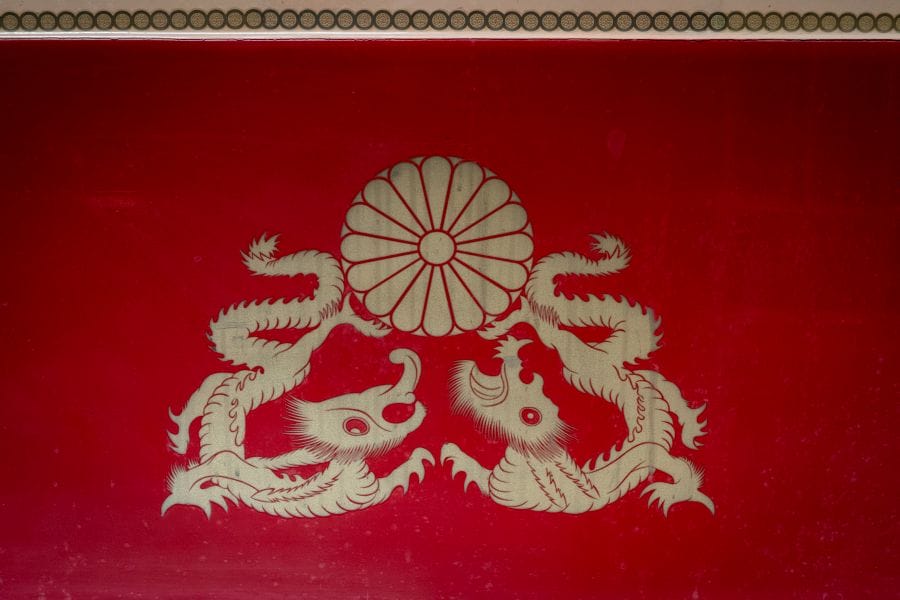
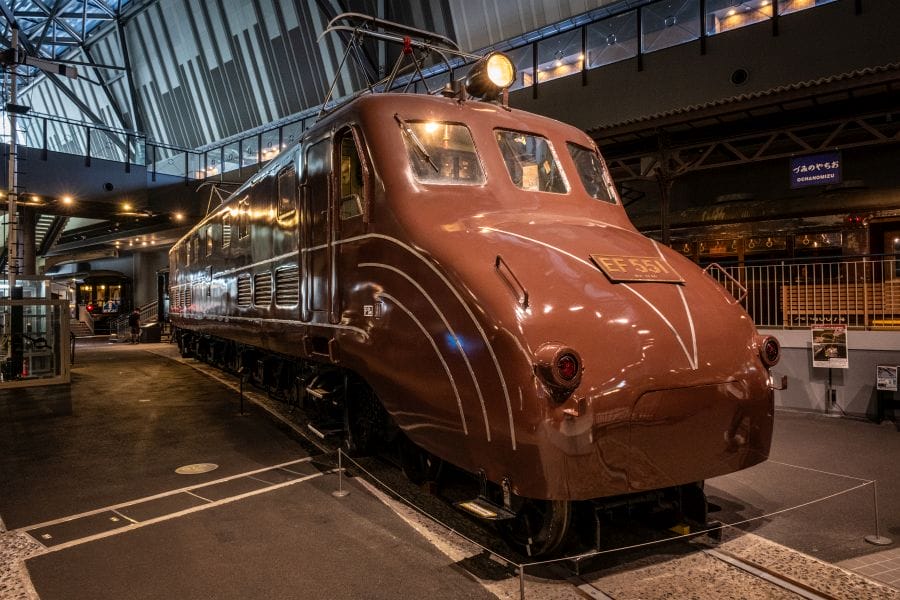
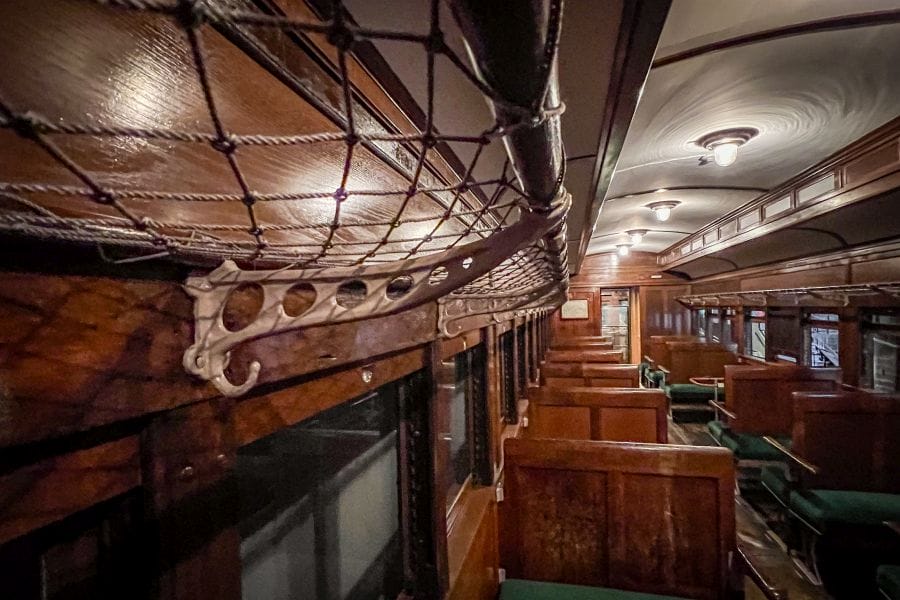
Specialised galleries display preserved imperial carriages crafted with polished lacquer work, silk upholstery, and gold-leaf trim for use by the Imperial Family during the late nineteenth and twentieth centuries. The main hall also houses the EF58 electric locomotive, which historically pulled imperial trains. Open-plan design allows you to inspect train undercarriages from sunken pits or examine roof-mounted pantographs from upper decks. Roof terraces look directly onto the adjacent railway lines, where bullet trains and local passenger trains pass continuously.
Eating and shopping at the museum
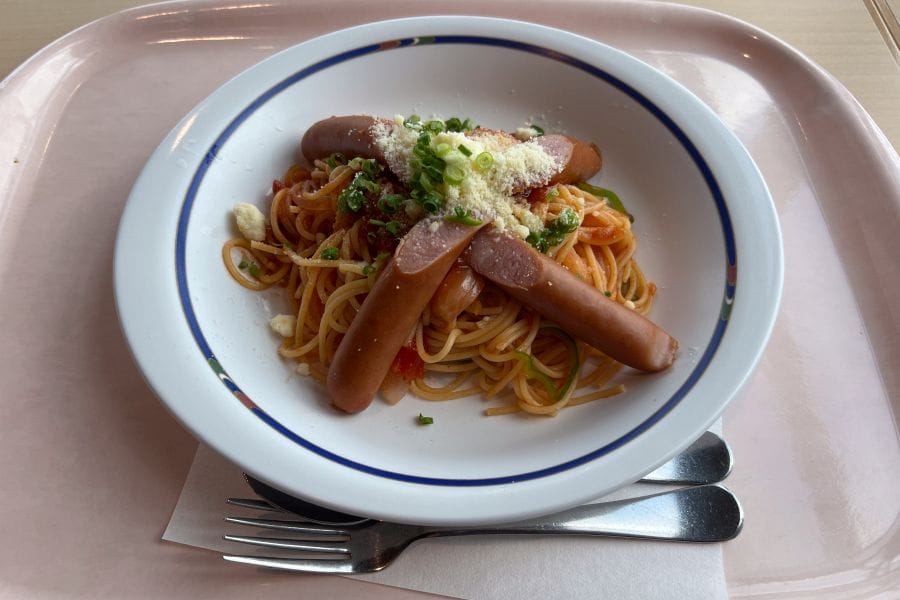
It’s best to plan to spend three hours or more in the museum to enjoy everything. Conveniently, there are several eateries, ranging from a fancy sit-down restaurant to a huge self-service cafeteria, and a kid’s fast-food joint with train-themed play furniture. Several kiosks sell the ekiben boxed lunches typically sold at stations and there are train carriages dotted around the museum where you can sit and eat. You’re also welcome to bring your own food.
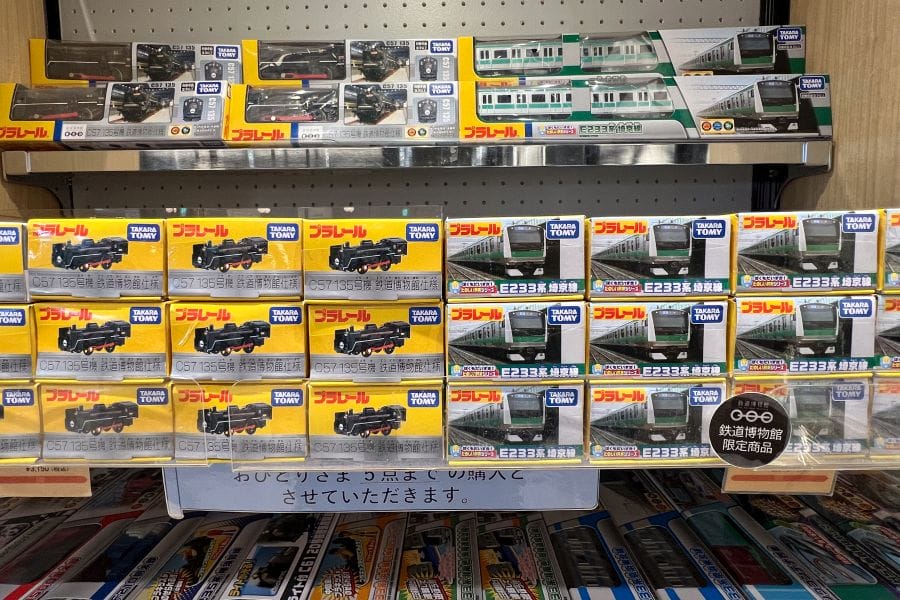
The museum also has a shop selling every kind of model train. You can also purchase train-themed clothing including T-shirts and neckties with little trains instead of stripes.
Information
Name in Japanese: 鉄道博物館
Pronunciation: tetsu haku-butsu-kan
Address: 3-4-7 Onari-chō, Ōmiya Ward, Saitama 330-0852